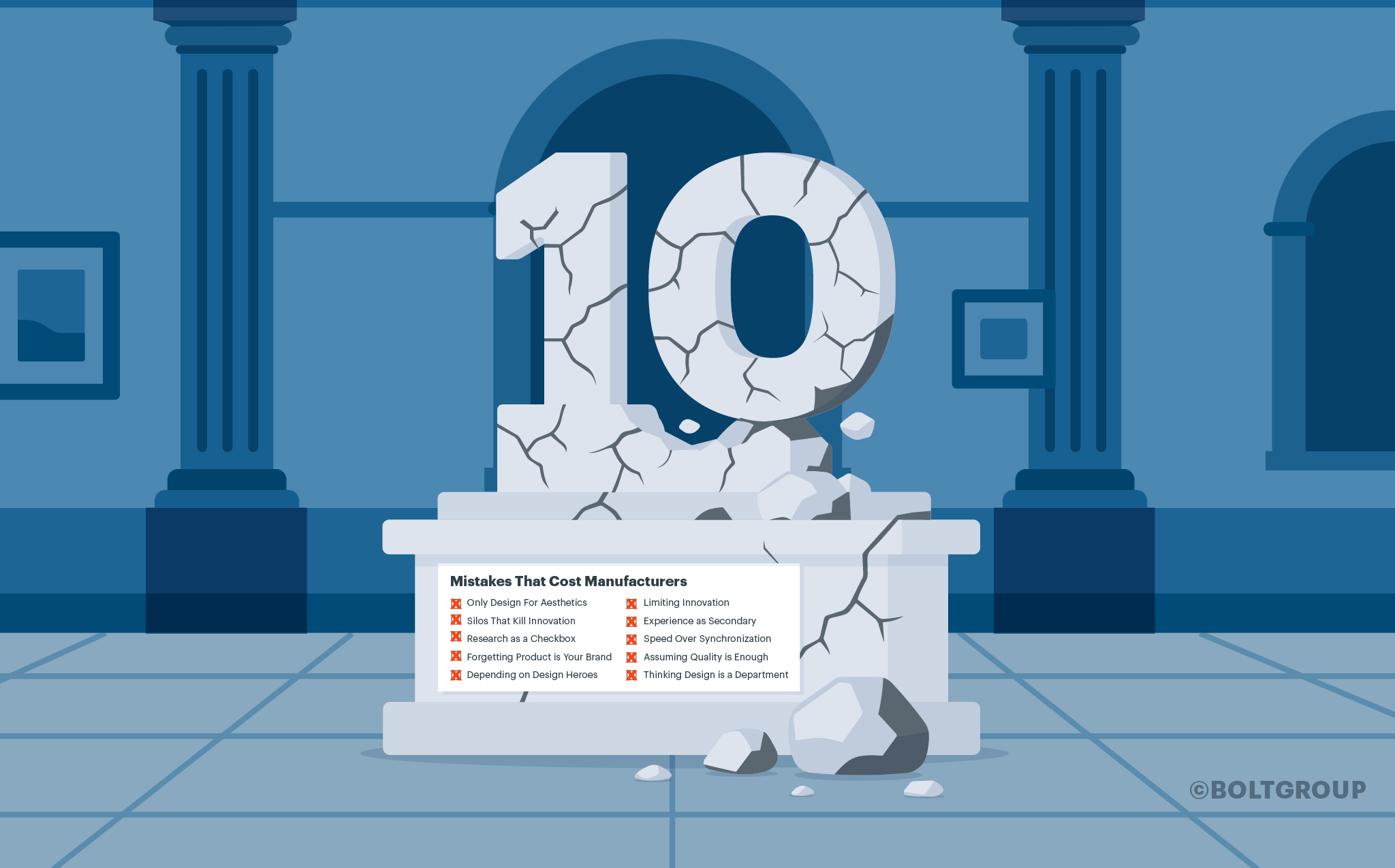
And How Design Leadership Turns Them Into Competitive Advantage
1. Mistaking Design for Aesthetics
You can have flawless engineering and still fall flat.
If customers say, “It does what we asked for, but we don’t get why we need it,” you’re missing the mark.
Design connects what you can build with what people actually want. Southwest Airlines didn’t just design routes or pricing. They designed an experience—a complete ecosystem around their mission to democratize air travel.
When you embed design into strategy, brand, and customer need, your products don’t just function—they matter.
2. Allowing Silos to Kill Innovation
You might have great design talent. But if engineering, marketing, sales, and ops are working in silos, innovation stalls.
Engineering builds something groundbreaking. Marketing sells something else. Sales promises features that don’t exist. Ops preps for volumes that never arrive.
3M’s “15% rule” encourages employees to pursue ideas outside their roles. Post-it Notes were born from a failed adhesive and a colleague who saw its hidden potential.
Cross-functional collaboration isn’t just a best practice. It’s a multiplier for innovation.
3. Treating Research as a Checkbox
Customer insights aren’t worth much if they sit untouched in a binder.
One manufacturer spent $200,000 to learn customers wanted simpler products. The report collected dust. Six months later, after finally redesigning the interface, sales jumped 40%.
Research only pays off when it drives action. Otherwise, it’s just expensive paperwork.
4. Overlooking That Your Product Is Your Brand
You can’t separate what you sell from how it shows up.
One company presents machined parts in sleek packaging, uses a clean UI, and leaves behind a thoughtful sales kit. Another shows up with a cardboard box, a chaotic PowerPoint, and a flimsy brochure.
Same tech. Same price. Different result.
Your brand lives in every touchpoint, not just in your logo.
5. Depending on Design Heroes
That last-minute design miracle worker? They’re impressive—and unsustainable.
As you grow, launching multiple products at once, relying on heroics turns into a bottleneck. Quality slips. Timelines stretch. Stress skyrockets.
Design-led manufacturers build systems for creativity. They make excellence repeatable, not accidental.
6. Limiting Innovation to the “Creative Team”
Innovation doesn’t live in one department.
A finance director spots a packaging tweak that cuts costs and improves UX. A service rep hears the insight that shapes your roadmap. A maintenance lead fixes the usability flaw stalling production.
In design-led cultures, creativity flows through the entire organization.
7. Treating Experience as Secondary
Two products. Yours is better, faster, and more feature-rich.
But the competitor’s arrives in premium packaging. Setup takes five minutes. Support responds instantly.
Yours comes in industrial wrapping with legalese instructions and a 12-minute hold time.
Specs can be copied. Experiences? Those are your moat.
8. Prioritizing Speed Over Synchronization
“We’ll start development while design catches up.”
Six months later: a product no one wants, beautifully manufactured.
Real speed comes from alignment. When design, engineering, and manufacturing move together—not in sequence—you reduce friction, rework, and waste.
The fastest manufacturers spend more time planning so they spend less time fixing.
9. Assuming Quality Is Enough
Today, quality is expected. So is competitive pricing.
What your competitors aren’t delivering? Delight. Intuition. Moments that make customers say, “Finally.”
Design-led organizations don’t just meet expectations—they exceed them in meaningful ways. That’s how they earn margin instead of chasing volume.
10. Thinking Design Is a Department
The future won’t belong to the biggest factories or the lowest prices.
It will belong to companies that lead with design.
Design-led manufacturers embed creativity into their culture. They think like designers and operators. They align strategy, customer insight, and brand into one cohesive vision.
These companies don’t silo design. They scale it.