Blog
February 23rd, 2026
Brand as an Ecosystem
From Expression to Interconnection
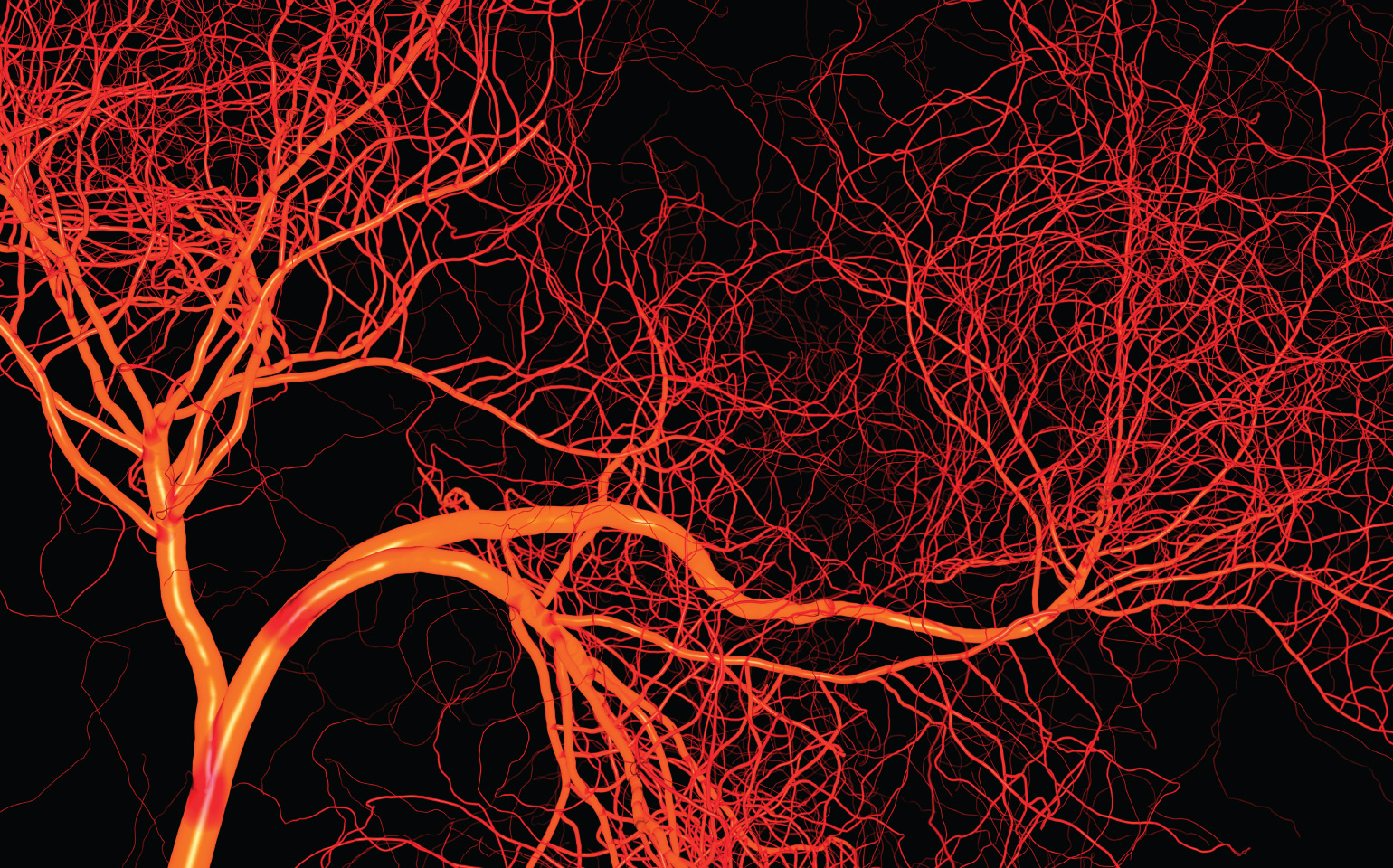
For decades, organizations have treated brand as a set of outputs: a logo, a tagline, a campaign. But the most resilient companies understand it as a living ecosystem: an interconnected network of purpose, people, products, and experiences that evolves and adapts together.
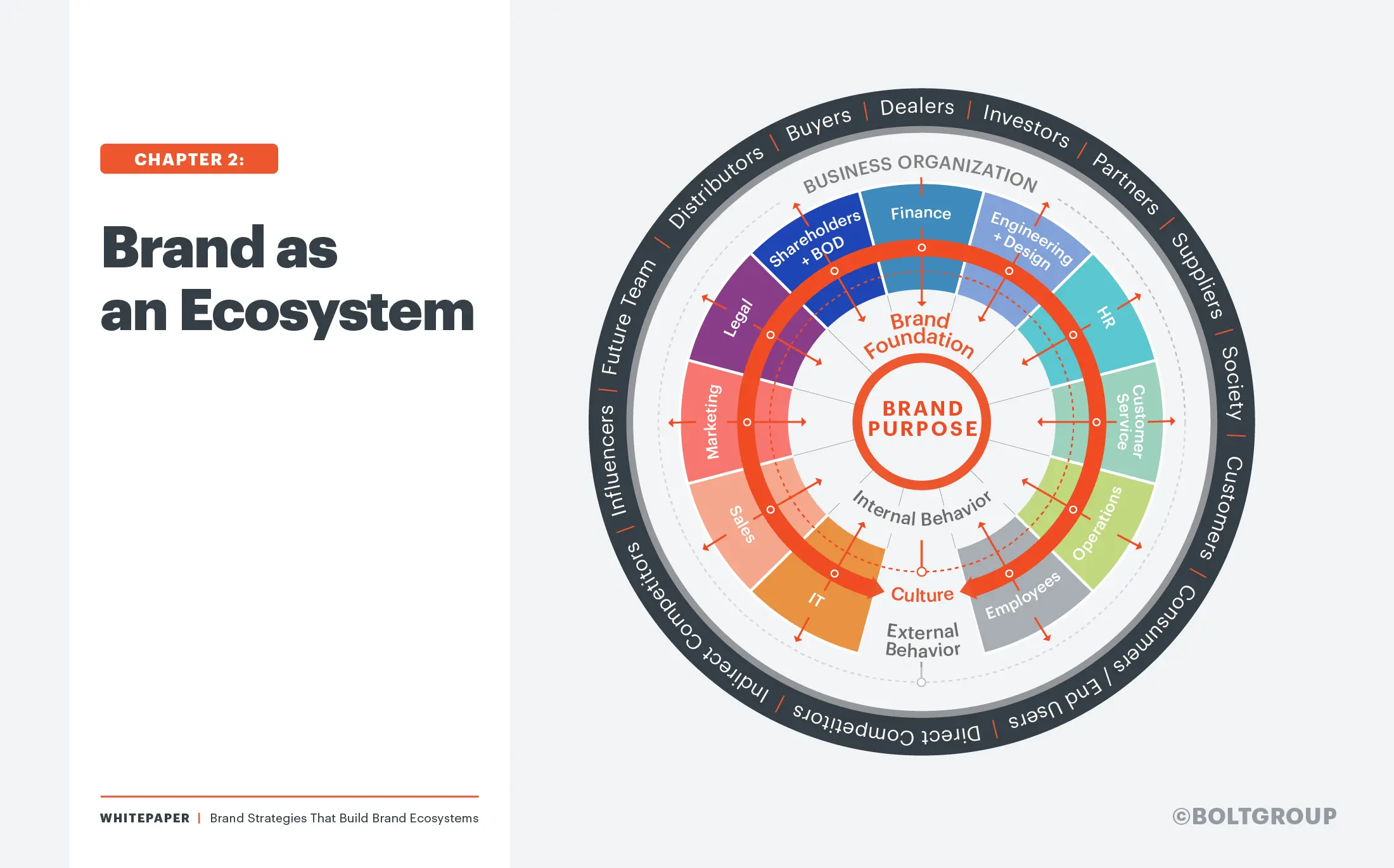
A brand ecosystem is the living network of relationships between an organization’s purpose, people, products, and experiences—designed to grow in harmony with the world it serves.
At BOLTGROUP, we’ve seen that a thriving brand ecosystem keeps every part of the organization connected to a shared source of meaning. It ensures that what’s promised in strategy is lived in culture and delivered through experience.
The Case for Interdependence
In an age of complexity, no single department or discipline owns the brand. The ecosystem approach acknowledges interdependence: the understanding that business, brand, and product design are not separate activities but shared expressions of the same intent.
BOLTGROUP’s teams of strategists, designers, engineers, and researchers are cross-trained to think in systems. We don’t just design brands or products. We design the relationships between them.
When this interdependence is missing, organizations experience brand fragmentation:
- Marketing speaks a different language than product.
- Strategy evolves faster than experience.
- Customers encounter inconsistencies that erode trust.
When the ecosystem is healthy, however, each part reinforces the others:
- Business Strategy defines the ambition.
- Brand Strategy gives it meaning.
- Design makes it tangible.
- Culture sustains it.
Anatomy of a Healthy Brand Ecosystem
Like any living system, a brand ecosystem depends on structure, adaptability, and feedback:
- Structure: The core—your purpose, promise, and values—provides direction and stability.
- Adaptability: Your identity and experience design evolve in response to market and cultural shifts.
- Feedback: Continuous learning and measurement keep the brand aware, agile, and relevant.
When these components are intentionally designed, the organization moves with precision and flexibility—capable of sustaining coherence while welcoming change.
The Human Layer
A brand ecosystem is sustained by relationships. External influence begins internally. Your brand is only as strong as the behaviors that express it. Purpose drives behavior, and behavior drives brand.
That’s why BOLTGROUP approaches brand-building as culture-building. The most successful ecosystems are not dictated; they’re cultivated. Employees, partners, and customers all play a role in its vitality.
Healthy ecosystems grow through belief, not enforcement.
Designing for the Long Term
When brand functions as an ecosystem, it scales naturally. It adapts to new markets, new technologies, and new generations without losing its core identity. It becomes a living platform for innovation.
Our experience across industries shows that well-designed ecosystems deliver:
- Faster decisions guided by shared principles.
- Cohesive experiences that feel authentic and connected.
- Stronger trust from customers and employees alike.
- Sustainable brand equity built through continuous renewal.
The goal of brand strategy is cultivation. Not control.
Our next chapter is about diagnosing brand fragmentation. Learn how to identify the hidden disconnects between strategy, brand, and experience.