Build Recognition
A VBL can be the subtle thread of continuity that ties disparate products together and builds brand recognition. And with recognition comes power. In fact, nearly six out of 10 people say they prefer to buy new products from brands they recognize. Consumers in North America and Latin America value brand recognition more than consumers in any other region, naming it as the second-most important reason (after affordability) that consumers purchase a new product.**
Brand recognition creates consumer pull, and it gives your channel partners a stronger story and a better combination to sell. Car companies have long used the common thread of a VBL to capture consumer segments and build recognition in their brands. KitchenAid appliances are easy to spot across a kitchen counter—building recognition through their robust aesthetic, painted finishes, and stainless metal accents.
Spotlight Differentiation
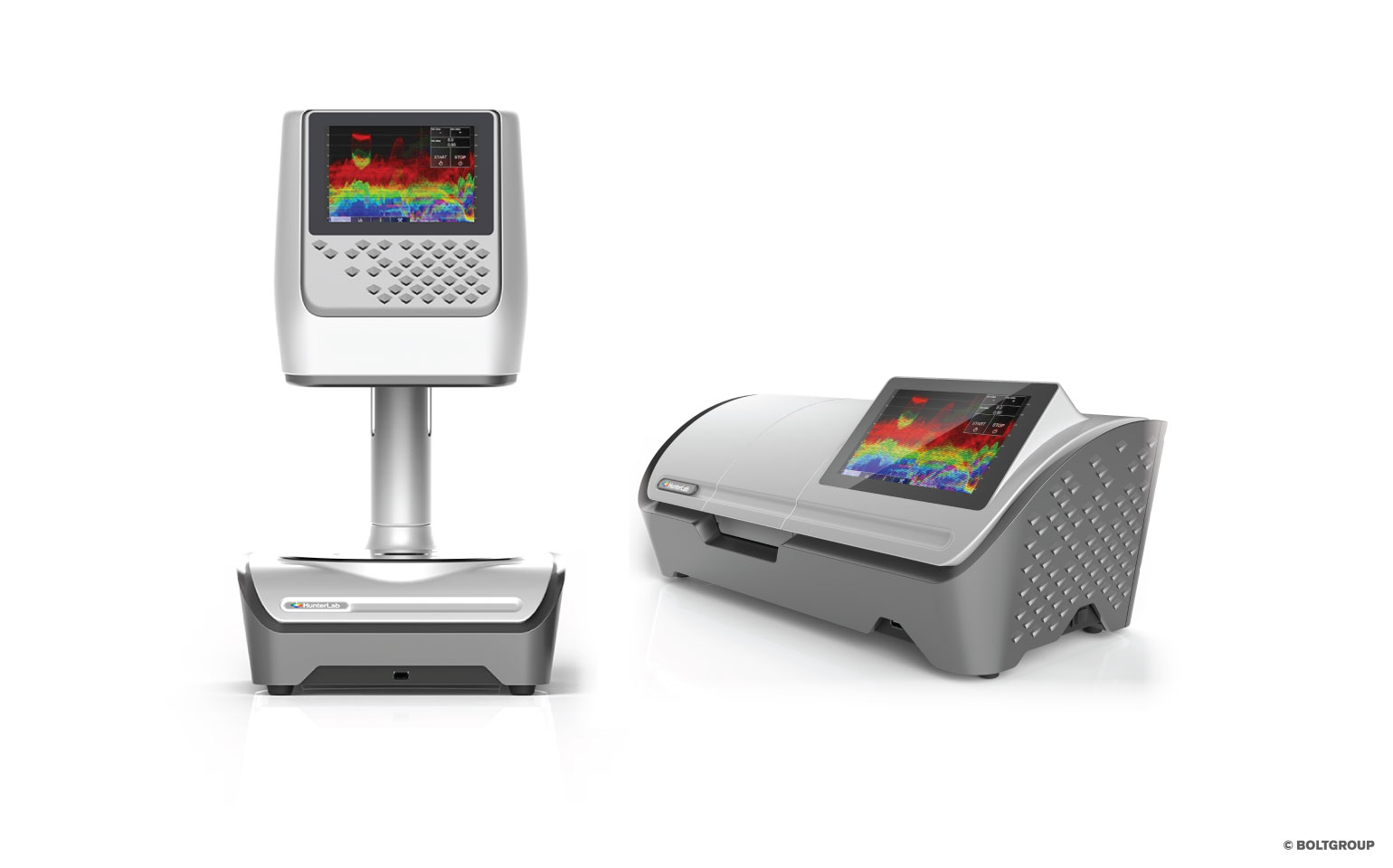
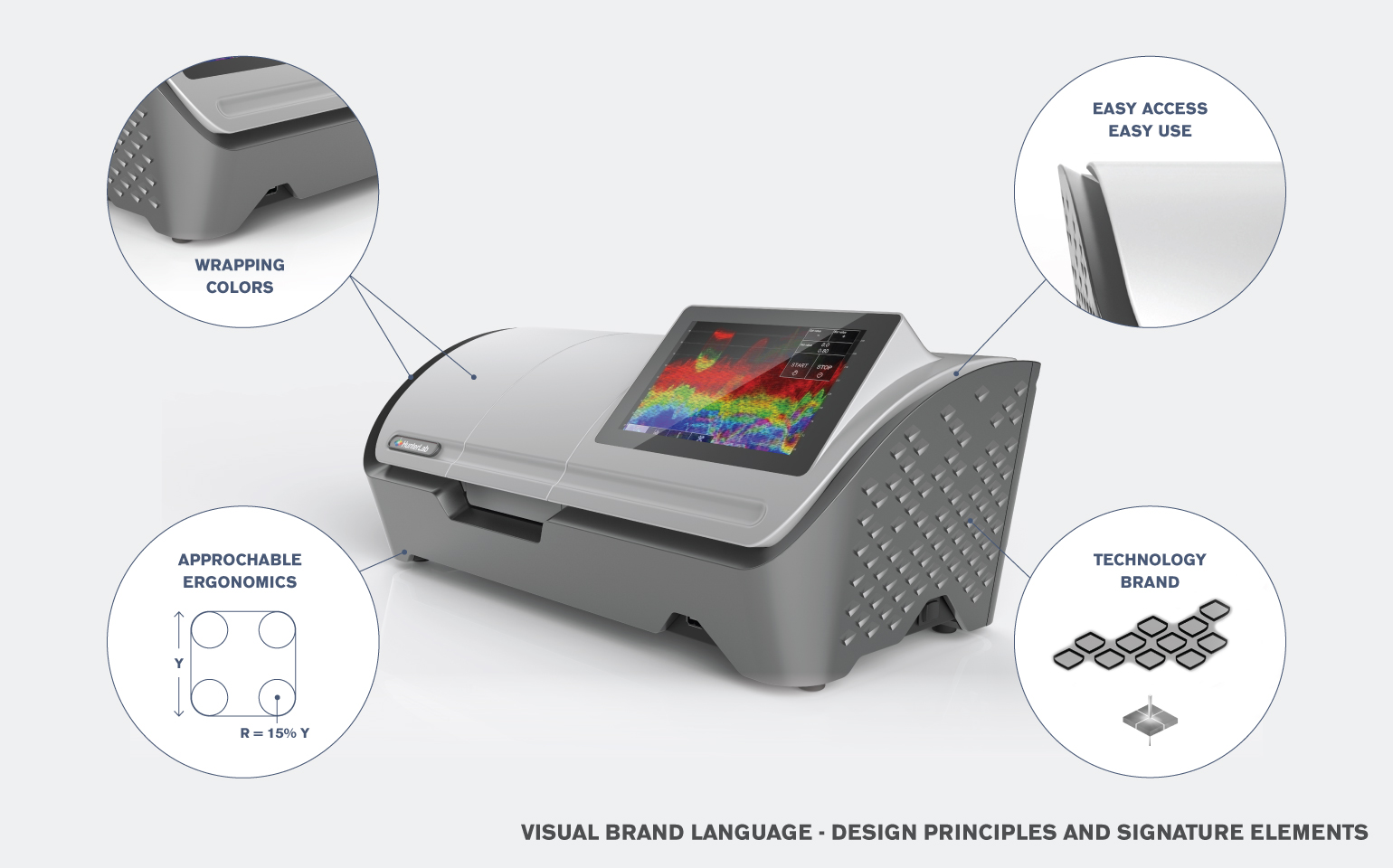
Successful VBLs are distinctive, ownable, and valuable. They focus attention on the distinct features of your product. For HunterLab we designed unique signature elements like the diamond pattern, evocative of HunterLab’s diamond shaped logo, molded into the exterior of every product. Overarching design principles for HunterLab include the composition of radiuses and sweeps within the overall rectangular footprint, and contrast in colors and textures to highlight different functions. All elements were created to communicate the friendly ease-of-use distinctive to HunterLab’s brand.
Convey Brand Characteristics
The VBL leverages the brand to create positive user experiences while advancing key attributes (e.g., safety, innovation, quality). After all, your product is the most enduring advocate of your brand in the minds of your customer. When BOLTGROUP created the Kobalt brand for Lowe’s and then the VBL for the first family of Kobalt tools, we conducted consumer research to understand which attributes resonated with the target consumer as an early step. Key attributes included: Pro-Quality, Accessibility, and Setting New Standards. Product design features—including the metallic finish on the tools and the elastomeric texture of the grip—were carefully crafted to communicate these attributes.
Communicate Key Messages
Like a written language, a visual brand language can help tell the story of a product. Its voice and message connect with your consumer. It makes a promise—not through words, but through shape, composition, pattern, color, detail, and texture. The right message will speak to your customer, telling them about the character and quality of the product. In addition to core brand attributes, a VBL can communicate other important messages. For example, a cohesive family look communicates good planning and thoughtfulness.
Delineate Product Collections or Price Points Within a Brand
Proprietary product lines aimed at different customers may require a design language tailored to meet differing needs. Like dialects in a verbal language, a design language can be fine-tuned for differences in product collections or company divisions while maintaining important unifying elements. Additionally, a VBL can help consumers navigate the features and options of various price points in a product line. BOLTGROUP devised a VBL for the Ridgid family of vacuums that steps consumers up three levels from good to better to best.
Gain Efficiencies and Inspire Creativity in all Innovation Cycles
VBLs can also reduce product development cycles by providing tools and guidelines to aid design teams—keeping them from reinventing the wheel every time. A VBL doesn’t have to be a strict set of rules that stifle creativity. In fact, a strategic VBL can inspire creativity and become a framework within which design exploration is cultivated and realized.
A VBL can be an advantage to any manufacturer. BOLTGROUP’s VBL process starts with definition of the client’s brand foundation, deep understanding of customers / channels / end users, and specification of the key attributes and messages to be communicated. We identify a product’s focus areas by category and what the manufacturing criteria are to achieve success. Within this framework, we partner with our client to design appropriate signature elements and design principles. Ultimately a Visual Brand Language for products is profiled in a design standards document used by our client’s internal and external teams for ongoing product development.
**From a 2015 Nielsen study: Understanding the Power of a Brand Name