White Paper
compass
December 10th, 2025

Building Trust by Design: A Framework for Leadership

Part 2 of 2

The 7 Silent Trust Killers: Pitfalls That Quietly Erode Value

Trust rarely disappears in one dramatic event. It erodes slowly, through subtle missteps that feel harmless in the moment. At BOLTGROUP, we’ve seen these patterns repeat across industries. We call them The 7 Silent Trust Killers.

1. Inconsistency

When your messaging, visuals, or behaviors don’t align, customers hesitate. Every inconsistency, however small, introduces doubt. Does your website promise innovation while your sales process feels outdated? Does your leadership speak about customer-centricity while your policies create friction? Misalignment breeds mistrust.

2. Fragmentation

Multiple sub-brands, disconnected divisions, or conflicting product stories create confusion. Customers don’t buy from confusion. They need clarity. They need to understand who you are, what you offer, and why it matters—in seconds, not minutes. Fragmentation dilutes recognition, scatters resources, and fractures your story.

3. Complexity

Overly complicated portfolios, jargon-heavy messaging, or internal silos make it hard for customers to understand or believe your promise. Complexity creates cognitive load. And when customers have to work too hard to understand you, they move on. Simplicity builds confidence. Clarity drives conversion.

4. Vanity

Redesigns and campaigns driven by ego instead of insight rarely build trust. Style without substance is a short-lived illusion. When brand decisions are made to satisfy internal preferences rather than customer needs, you’re designing for the wrong audience. Vanity projects may win awards, but they don’t win markets.

5. Detachment

When leadership treats brand as marketing’s job, the organization fractures. Brand is not a department; it’s the connective tissue of the entire business. Every decision—from hiring to product development to customer service—either reinforces or undermines your brand. When leadership detaches from this reality, trust erodes from the inside out.

6. Fear

Safe strategies feel comfortable, but they stall growth. Customers don’t follow timidity; they rally behind conviction. Playing it safe means blending in. And in a crowded market, invisible is the same as irrelevant. The brands that build trust are the ones willing to take a stand, make bold choices, and lead rather than follow.

7. Drift

Even strong brands lose direction when they stop listening. Markets evolve. Customer needs shift. Competitors innovate. The moment your brand stops paying attention, when you rely on past success instead of current insight, trust begins to slip away. Drift is the silent killer of legacy brands.

The Good News

Each of these killers is fixable. But only when leadership has the courage to face the root causes rather than manage the symptoms.

Because in the end, trust isn’t maintained by intention, it’s maintained by attention.
Trust by Design: The BOLTGROUP Approach

Trust is not a byproduct of design. It is the design.

When we talk about Culture of Design, we’re not referring to aesthetics or process. We’re talking about a mindset—a way of leading, collaborating, and innovating that puts human needs at the center of every decision.

In a culture of design, trust begins long before the first prototype or creative brief. It begins with curiosity, with empathy, with the willingness to understand before being understood.

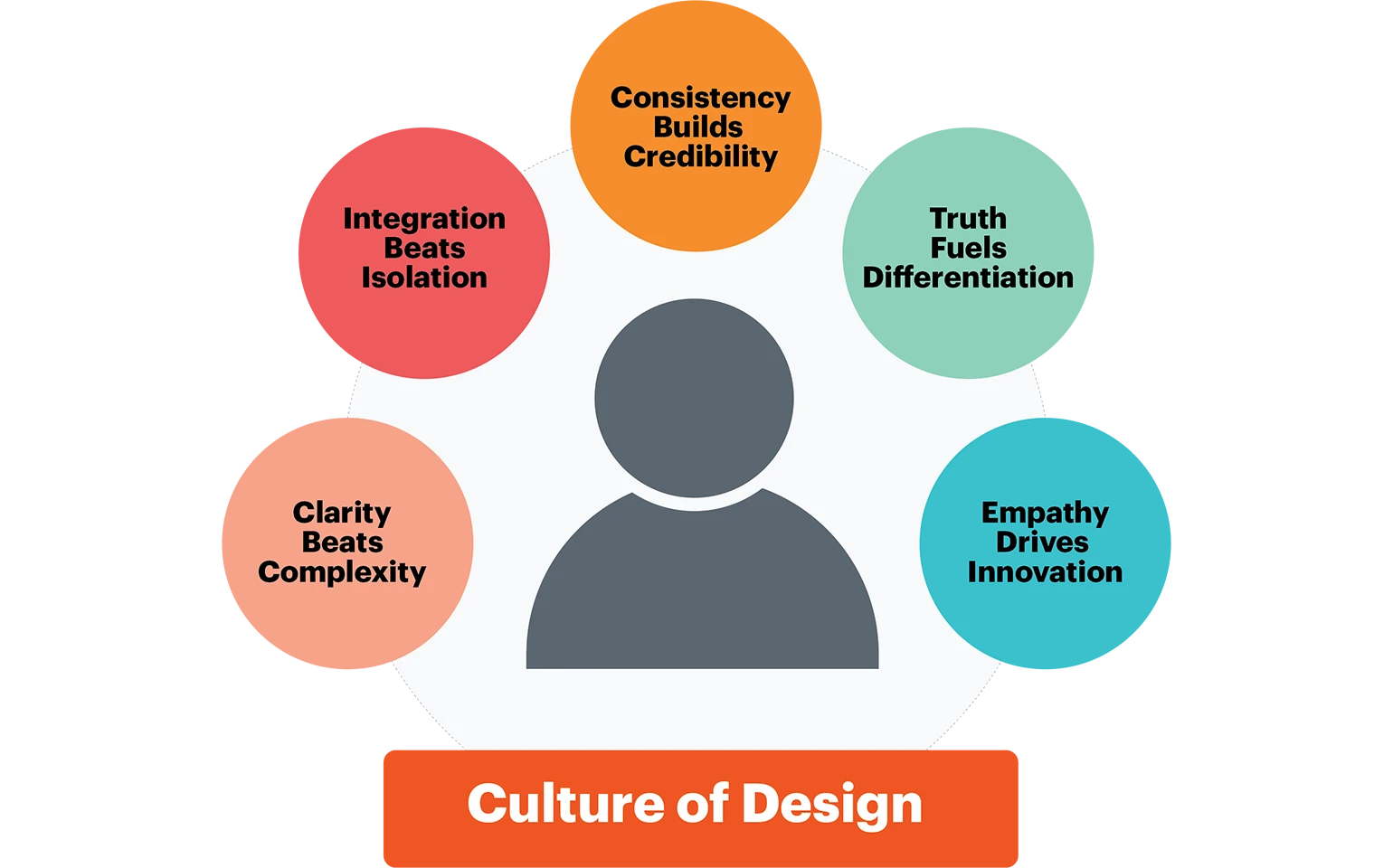
Over four decades, we’ve found that brands built on this philosophy share five consistent traits:

1. Clarity Beats Complexity

Strong brands communicate simply. They align everyone—internally and externally—around one clear purpose, one promise, one experience. Clarity doesn’t mean simplistic. It means distilled. It means knowing what matters and having the discipline to say no to everything else.

2. Integration Beats Isolation

When product design, brand design, and business strategy operate as one system, the organization moves with coherence and power. Silos create friction. Integration creates flow. This isn’t just about aesthetics matching messaging, it’s about every function in the business reinforcing the same strategic intent. Integration isn’t a luxury; it’s a leadership advantage.

3. Consistency Builds Credibility

Trust grows through repetition of truth. When a brand delivers the same promise across touchpoints—digital, physical, and human—it becomes believable. Consistency isn’t boring. It’s the foundation on which differentiation is built. You can’t be memorable if you’re constantly changing who you are.

4. Truth Fuels Differentiation

Authenticity is the new competitive edge. The more aligned your actions and intentions, the more distinct your brand becomes. In a world saturated with posturing and performance, honesty stands out. Customers can sense when a brand is pretending versus when it’s being real. Truth isn’t a marketing tactic; it’s a strategic posture.

5. Empathy Drives Innovation

Understanding your customers’ lives and pain points spark ideas that matter. Empathy turns insight into innovation and innovation into loyalty. The best products and experiences don’t come from labs or boardrooms, they come from deep understanding of human needs. Empathy isn’t about being nice. It’s about being relevant.

Why This Matters

These aren’t just design principles, they’re cultural behaviors. When a company commits to them, design becomes more than a department. It becomes a way of working that inspires trust inside the organization as much as it earns it outside.

That’s what we mean by trust by design.

Culture of Design Chart

The Leadership Imperative: What Changes When You Put Others First

For leaders, embracing an About-You-First philosophy is both a mindset shift and a moral choice. It’s a recognition that your brand doesn’t exist to glorify your organization; it exists to serve your audience.

Leadership built on trust requires vulnerability. It demands the courage to listen, the patience to understand, and the discipline to align. It means asking, “How can we make this better for them?” before asking, “What’s in it for us?”

What This Looks Like on Monday Morning

The CEO who stops asking “How do we look?” and starts asking “How are we showing up?” has already begun the transformation.

It shows up in how you brief your teams: not “Make this prettier,” but “Help us solve this problem for our customers.”

It shows up in how you allocate resources: not “What will generate the fastest ROI?” but “What will build the most enduring trust?”

It shows up in how you measure success: not just revenue and margin, but customer retention, employee engagement, and brand equity that compounds over time.

That shift changes everything. Employees rally around a shared purpose. Customers feel connected. Partners see clarity. The brand becomes not a façade, but a reflection of culture in motion.

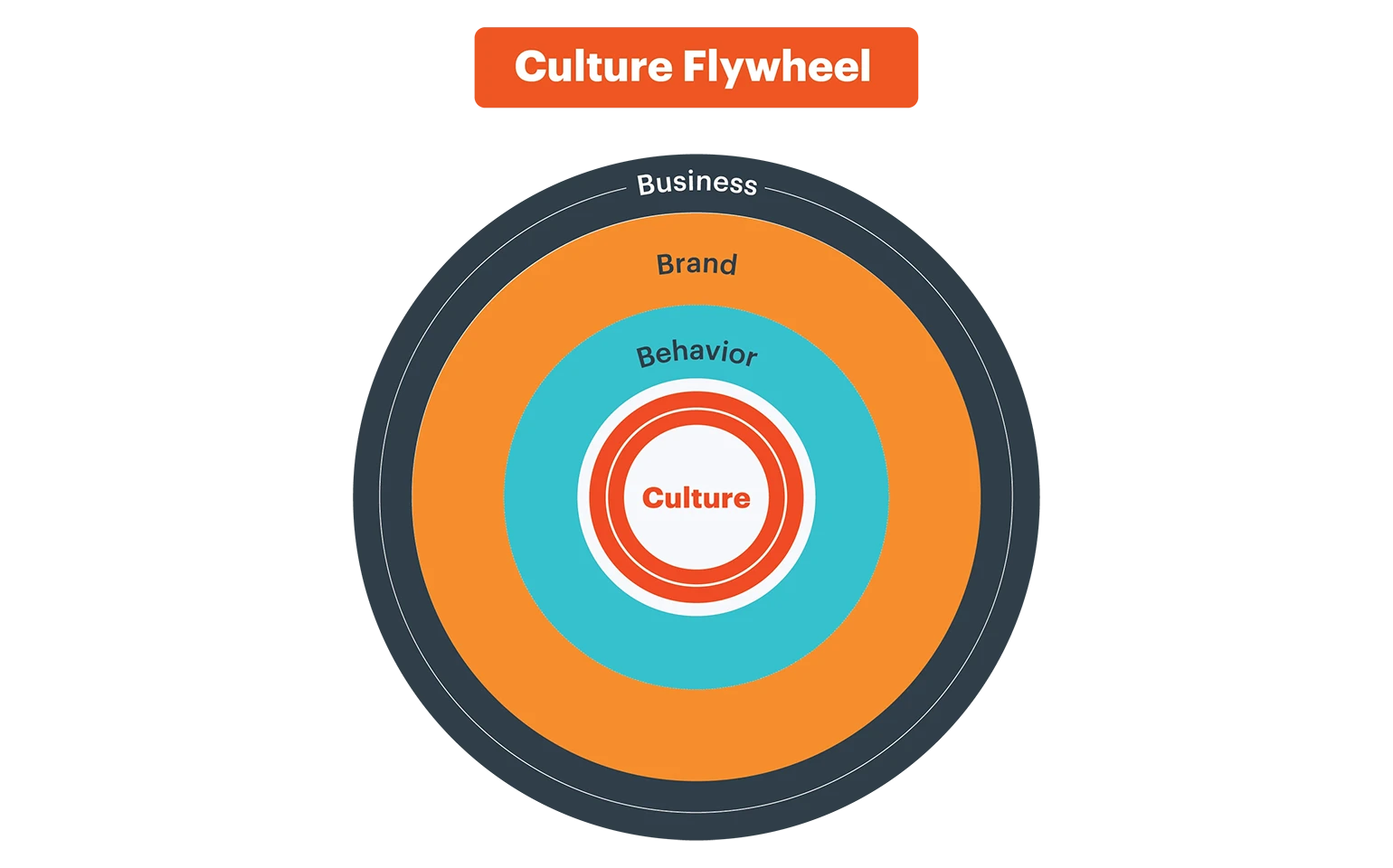
Culture Flywheel chart

The Flywheel

Here’s the progression we see time and again:

Culture drives behavior.
When leadership commits to empathy, clarity, and truth, it shapes how teams think and act.

Behavior drives brand.
What employees do—how they solve problems, serve customers, and collaborate—becomes the lived experience of your brand.

Brand drives business.
When customers trust you, they buy more, stay longer, and advocate louder. Trust becomes a competitive moat that deepens with time.

Profit remains essential, but it becomes a byproduct of purpose rather than the sole objective.

Where Does Your Organization Stand?

At its core, trust is an expression of care. It’s the moment when a customer believes that your intentions are as genuine as your capabilities. That belief can’t be faked, outsourced, or automated. It must be designed, lived, and renewed every day.

Design, at its best, is an act of love—a conscious decision to give your best self for the good of others. When that principle guides how you think, lead, and serve, trust becomes not just an outcome, but a way of being.

But here’s the challenge: the gap between intention and perception is often invisible from inside the organization.

You may believe your brand is clear, consistent, and customer-centered. But if your customers, partners, or employees experience something different, it’s their perception that defines your reality.

That’s why we’ve created a diagnostic tool to help leadership teams identify where trust may be quietly eroding and where strategic focus will create the greatest impact.

The Trust Audit is a brief assessment that maps your organization against the principles in this paper: the Trust Equation, the 7 Silent Trust Killers, and the 5 traits of trust-centered brands. It takes less than 10 minutes to complete and provides a personalized analysis of where you stand.

Whether you work with BOLTGROUP or not, we believe every leader deserves clarity about the state of their brand. Because clarity is the first step toward alignment. And alignment is where trust begins.

Closing Thought: The Quiet Power of Care

Your clients, customers, and employees don’t need perfection. They need presence. They need consistency. They need truth.

When you put them first—when you build your brand around empathy, clarity, and authenticity—you don’t just earn trust. You compound it.

And that’s the real dividend of a brand designed for others.

Ready to assess where your brand stands?
Take the Trust Audit at https://boltgroup.com/the-trust-audit/

Want to explore how BOLTGROUP can help?
Reach out through the form below.

Let’s Start with a Conversation

For manufacturers and innovation teams navigating change, a discovery call with our team can clarify your needs—and reveal opportunities for growth.