Blog
May 19th, 2026
Three Questions I Asked in 2010.
In April 2010, I wrote a piece for Fast Company about TOMS Shoes and their One Day Without Shoes campaign. A quarter million people went barefoot for a day—posting photos, telling stories, living the mission. The result was brand building the right way, through what I called consumer empathy.
At the end of that piece, I asked three brand questions. They were aimed at any brand willing to be honest with itself:
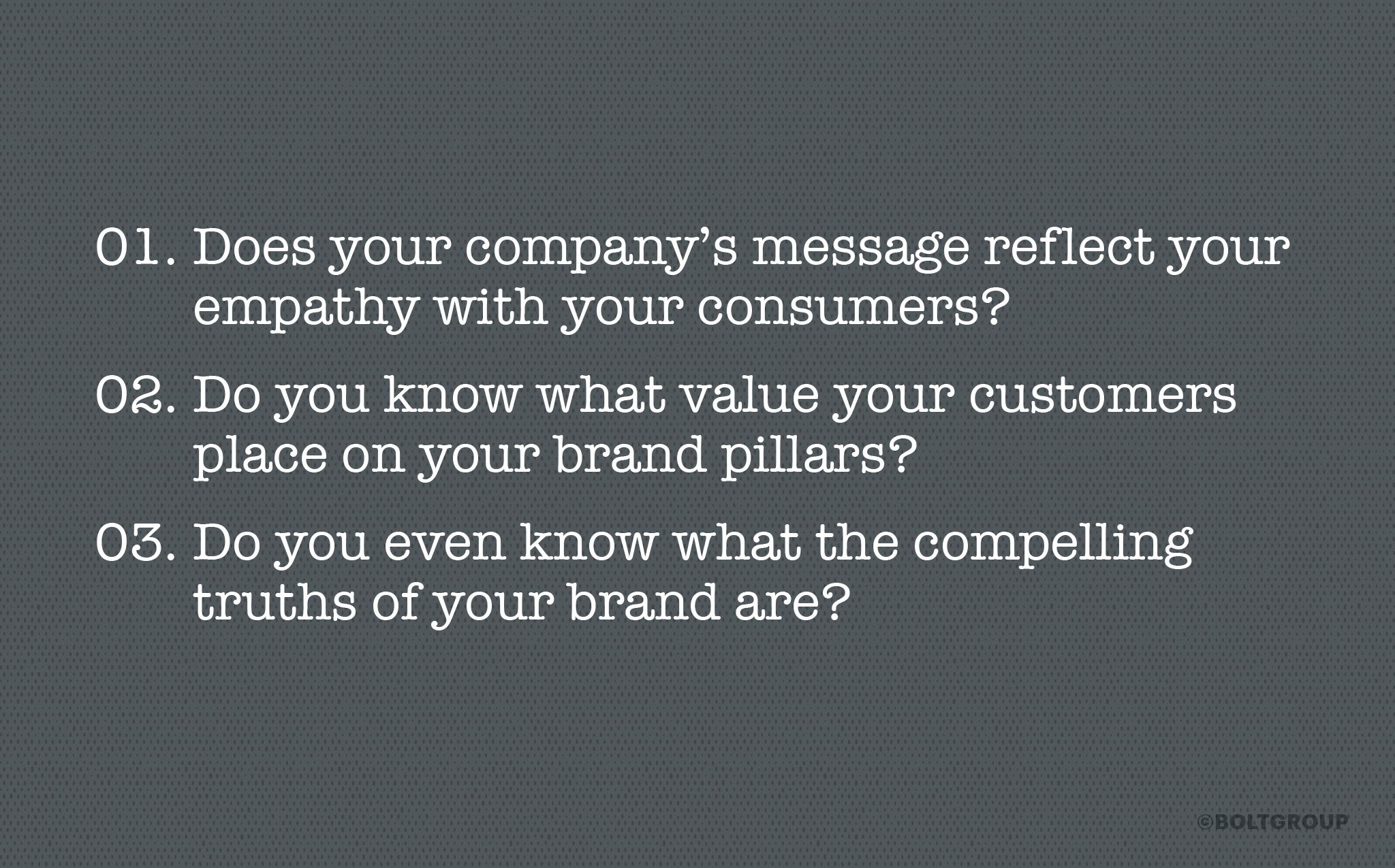
Does your company’s message reflect your empathy with your consumers? Do you know what value your customers place on your brand pillars? Do you even know what the compelling truths of your brand are?
Fifteen years later, I’m still asking. And for most organizations, the answers haven’t gotten any clearer.
The Brands That Actually Answered
TOMS didn’t freeze its values in amber. As its audience grew and changed, so did its mission. The one-for-one shoe model that launched a movement has evolved into something broader—a commitment of one-third of profits to mental health, access to opportunity, and ending gun violence. The cause shifted because the consumer’s pain shifted. That’s consumer empathy doing its work over time.
Bombas did something even more specific. They learned that socks are the single most requested item at homeless shelters, and then engineered a donation sock optimized for shelter conditions—different from the retail sock, designed for the actual human receiving it. Empathy built into the product itself.
Patagonia made the most radical statement of all. In 2022, the company transferred ownership to a nonprofit dedicated to fighting climate change. Three billion dollars. The message was clear: the cause matters more than the company. It answers the question “what are your brand’s compelling truths?” with an act that is impossible to fake.
Why Most Brands Are Still Stuck
Most organizations know what they want their brand to mean. Very few know what their customers actually believe it means. The gap between those two things is where brand equity quietly erodes.
Companies develop a brand platform, launch a refreshed website, hand out new business cards, and consider the work done. What they’ve built is a projection—an image of who they want to be. Consumer empathy requires something more demanding: sitting inside the world your customer actually inhabits, understanding their real frictions, their real aspirations—the things they’d tell you if you asked the right questions in the right room.
Consumer empathy isn’t a campaign. It’s a discovery process. And most organizations skip the discovery.
The brands winning on this dimension didn’t stumble onto their missions. They did the work to understand what their customers genuinely valued, then aligned everything—product, business model, communication, and company behavior—to deliver on that truth consistently. Every transaction came from the truths of the brand.
As I wrote in 2010, that’s the standard. It’s still rare.
The Questions Are Still Worth Asking
Here’s the honest self-assessment for any brand manager, CMO, or founder reading this:
- Does your messaging reflect genuine empathy with the people you serve, rooted in what you’ve actually learned about them?
- Do you know what your customers value most about your brand, from research, not assumption?
- Can you articulate the compelling truths of your brand: the things that are true, differentiating, and deeply relevant to the people you’re trying to reach?
The brands that will define the next fifteen years are the ones willing to do this harder work—to stop projecting and start listening, to build around what their customers know them to be and what they genuinely need them to become.
That work is possible. It’s just not accidental.
Start Here.
If answering those three questions feels more like a scavenger hunt than a strategy conversation, that’s worth paying attention to. And if an honest look reveals that your brand’s projected identity and your customers’ lived experience are pointing in different directions—we can help you close that gap. Brand discovery, consumer research, and the strategic alignment work that follows is exactly what we do.