Blog
design standards and guidelines for Golf Pride grips
August 26th, 2025

Creating Design Standards and Guidelines

Differentiation by Design Guide: Chapter 8

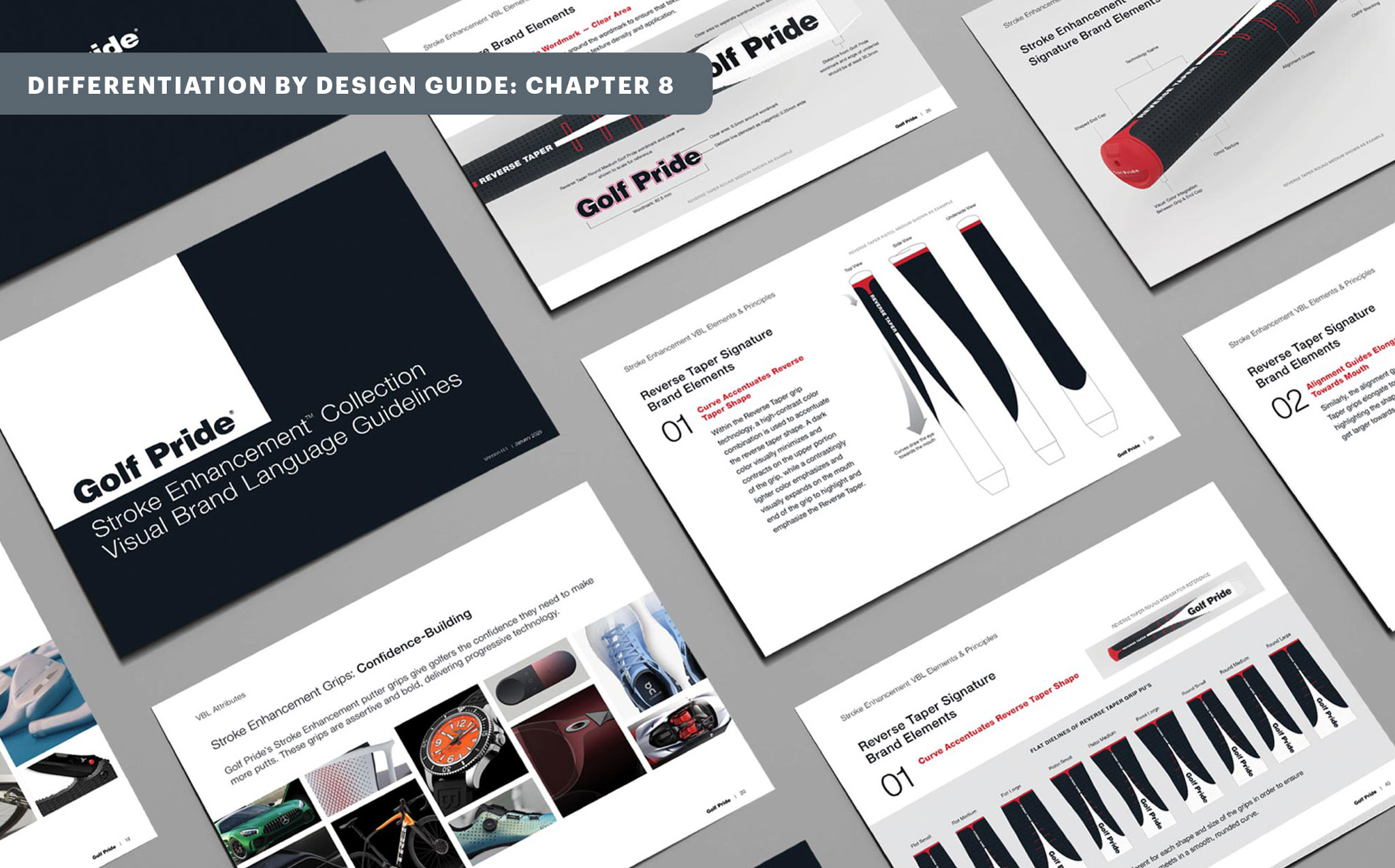
Even the strongest Visual Brand Language will falter without clear, enforceable standards. Design systems thrive on documentation. Without it, inconsistency creeps in, decisions lose clarity, and the brand voice weakens across touchpoints. Guidelines do more than control; they empower. They give teams the tools and frameworks to design intentionally and in unity.

Design standards and guidelines formalize your VBL and protect its integrity. They serve as a shared reference, helping cross-functional teams stay aligned while creating room for evolution and innovation within clearly defined parameters.
Why Standards Matter

Inconsistent design erodes brand equity. It introduces confusion, dilutes recognition, and creates uneven experiences across products and platforms. Strong guidelines prevent these outcomes by offering guardrails that preserve meaning while accommodating flexibility.

Standards create focus. Teams spend less time debating subjective preferences and more time solving the correct problems. New team members ramp up faster. Partners understand expectations. Time-to-market improves without sacrificing coherence.

What to Document

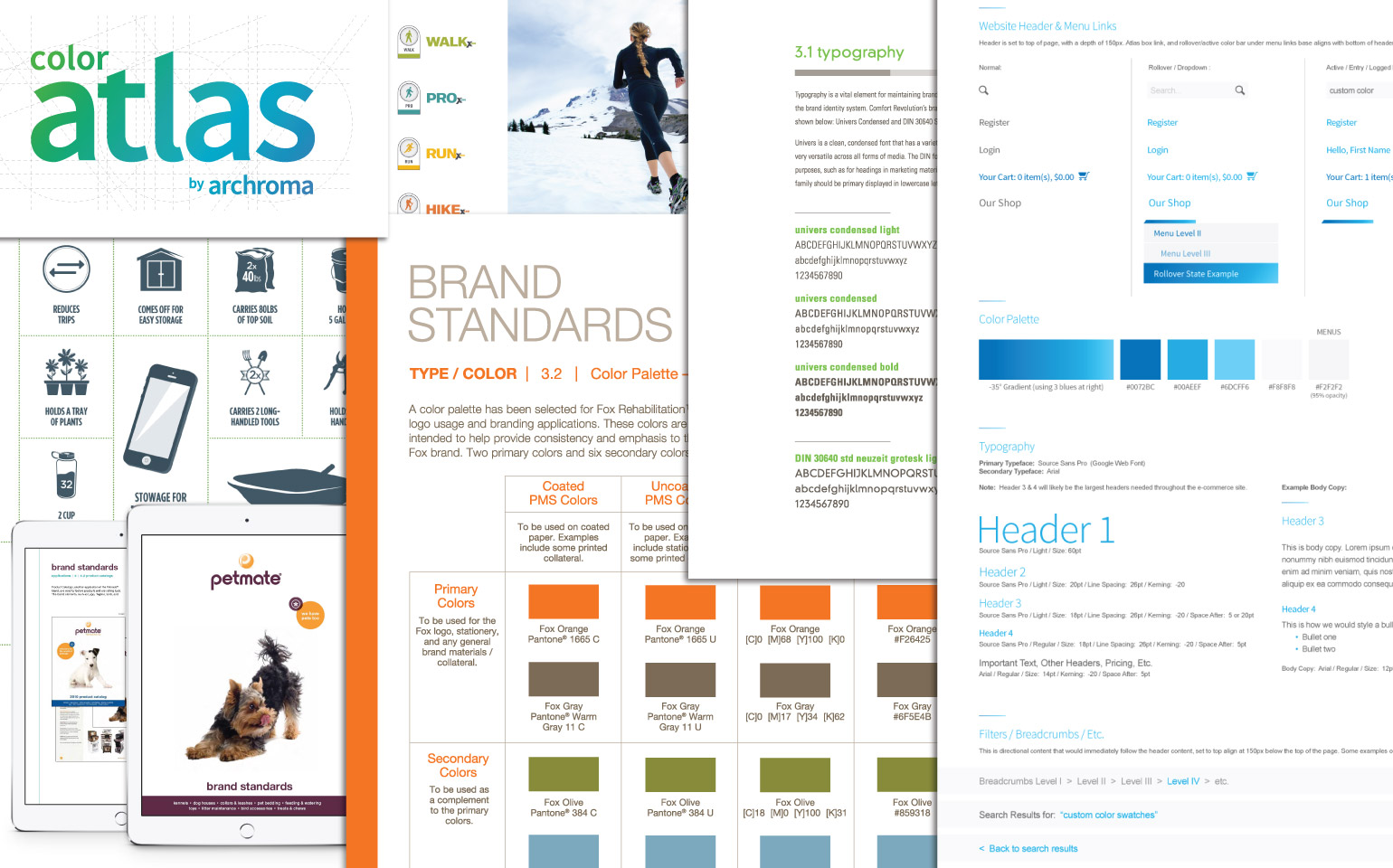
Comprehensive guidelines include strategic principles and detailed specifications:

  • Core Design Attributes: Emotional and functional traits that every product must express
  • Form Language: Shapes, proportions, profiles, transitions, and spatial hierarchy
  • CMF (Color, Material, and Finish) Standards: Color systems, materials, finishes, textures, and coatings
  • Interaction Models: Haptic feedback, physical gestures, motion, sound, and light
  • Modularity Rules: Where consistency is required and where variation is permitted
  • Ergonomics: Consistent, comfortable, and intuitive touch points between product and users
  • Application Examples: Best-practice implementations across product tiers or categories

Each section should link directly to the brand strategy and the VBL Matrix. This connection reinforces that every design decision serves a larger purpose.

Empowering Teams Through Clarity

Guidelines must remain accessible and adaptable. Static PDFs quickly become outdated. Consider modular, digital documentation tools that update in real time. Supplement visual specifications with rationale such as why a specific edge treatment exists, or how color signals category or function. This guidance builds trust and improves execution.

Avoid rigid prescriptions. Instead, define principles that guide decision making. Empower teams to adapt the system within clear boundaries.

Training and Adoption

Even the best documentation fails without education. Internal training sessions, design workshops, and review checkpoints ensure adoption. Encourage team members to understand the why behind the standards, not just the what.

Create channels for feedback and iteration. As products evolve and markets shift, the system must adjust. Maintaining relevance requires active stewardship.

Conclusion & What’s Next

Design standards and guidelines protect consistency, accelerate collaboration, and precisely ensure your Visual Brand Language scales. With documentation in place, your team gains both direction and freedom.

In the next chapter, we explore how to implement VBL into product development processes and evolve the system over time, ensuring that your design language stays relevant and continues to drive business value.

Let’s Start with a Conversation

For manufacturers and innovation teams navigating change, a discovery call with our team can clarify your needs—and reveal opportunities for growth.