Blog
March 16th, 2026
Building the Integrated Experience
Where Brand and Product Converge
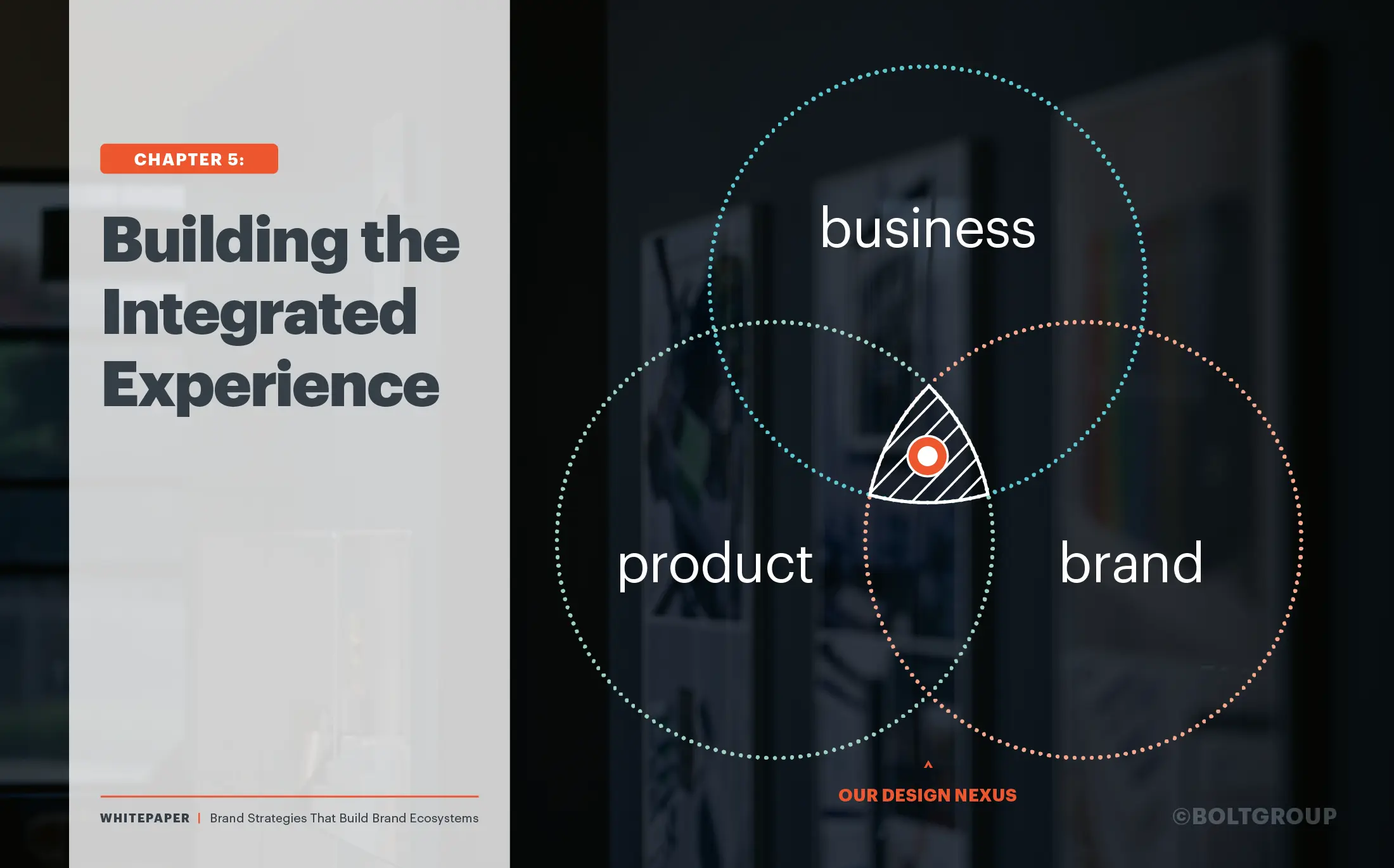
Once coherence is established through purpose and design, the next step is integration. Here we bring business strategy, brand, and product into a unified, lived experience. Integration is where a company’s promise meets its performance. It’s the bridge between what you say and what you make.
Integration turns belief into behavior, and strategy into experience.
At BOLTGROUP, integration is not the final phase; it’s culture. When an integrated brand ecosystem exists, your brand touches the real world and proves its strength through clarity, continuity, and creativity.
The Power of Convergence

For most organizations, brand and product live in separate silos where marketing drives the message while engineering drives the making. Integration closes that gap by ensuring that brand strategy and product strategy evolve together, not in parallel.
A fully integrated experience aligns three dimensions:
- Purpose: The shared north star guiding all disciplines.
- Expression: The way brand values come to life through design and communication.
- Experience: The tangible interaction that connects people to meaning.
When these three converge, the result is seamless: customers experience the same truth, whether they’re using a product, visiting a website, or meeting a team member.
Integration is where trust is built and every experience delivers on the same promise.
Designing for Connection
Integration is not about making every touchpoint look the same. It’s about making every moment feel the same. A unified brand experience carries a recognizable rhythm through language, tone, and emotional resonance that signals authenticity.
At BOLTGROUP, we design this rhythm by combining three design dimensions:
- Visual Integration: Harmonizing identity, interface, and industrial design so the product and brand speak one aesthetic language.
- Verbal Integration: Ensuring messaging, product naming, and user communication all reinforce the same values.
- Behavioral Integration: Translating principles into action, ensuring that service, support, and internal culture reflect the same mindset.
Each layer deepens the connection between customer and company—from recognition to relationship, from product satisfaction to brand loyalty.
Systems Thinking in Practice
An integrated experience requires systems thinking, which is the discipline of understanding how every decision affects the whole. In practice, that means breaking down internal silos and creating shared frameworks that allow teams to collaborate around a single source of truth.
Our process often includes:

- Experience Mapping: Tracing how a customer interacts with every facet of the organization, from awareness to advocacy.
- Touchpoint Design: Evaluating where meaning is made or lost across physical, digital, and human interfaces.
- Unified Design Language: Applying consistent visual and verbal patterns that scale across platforms and contexts.
These practices turn the abstract idea of “integration” into an actionable roadmap that unites creativity with operational precision.
Human-Centered Integration
Ultimately, integration is not technical; it’s human. The goal is not to impress audiences with design consistency but to build empathy and trust. Every integrated system must begin with a deep understanding of the people it serves. At BOLTGROUP, we embed human insight into every stage of the design process by designing with people, not just for them. This ensures the outcome feels authentic, intuitive, and emotionally resonant, because human-centered design is the connective tissue that keeps integrated ecosystems alive.
The Business Impact of Integration
When brand and product move as one, organizations gain exponential momentum:
- Speed: Decisions are made faster because everyone is guided by shared intent.
- Efficiency: Teams reuse assets and frameworks instead of reinventing them.
- Equity: Every experience reinforces the same value, strengthening brand trust.
- Resilience: The brand adapts without losing coherence.
Integration not only streamlines execution; it also compounds value. The organization becomes a unified ecosystem of design and delivery.
The Bridge to Continuity
Integration marks the turning point between definition and activation. It’s where systems thinking meets real-world performance. When done right, it sets the stage for the final phase of transformation: continuity. Continuity is about sustaining the brand’s rhythm, relevance, and resonance over time.
Integration brings everything together. Continuity keeps it alive.
In the next chapter, we’ll explore how to activate that brand continuity and ensure the systems you’ve built remain dynamic, resilient, and human as they scale.