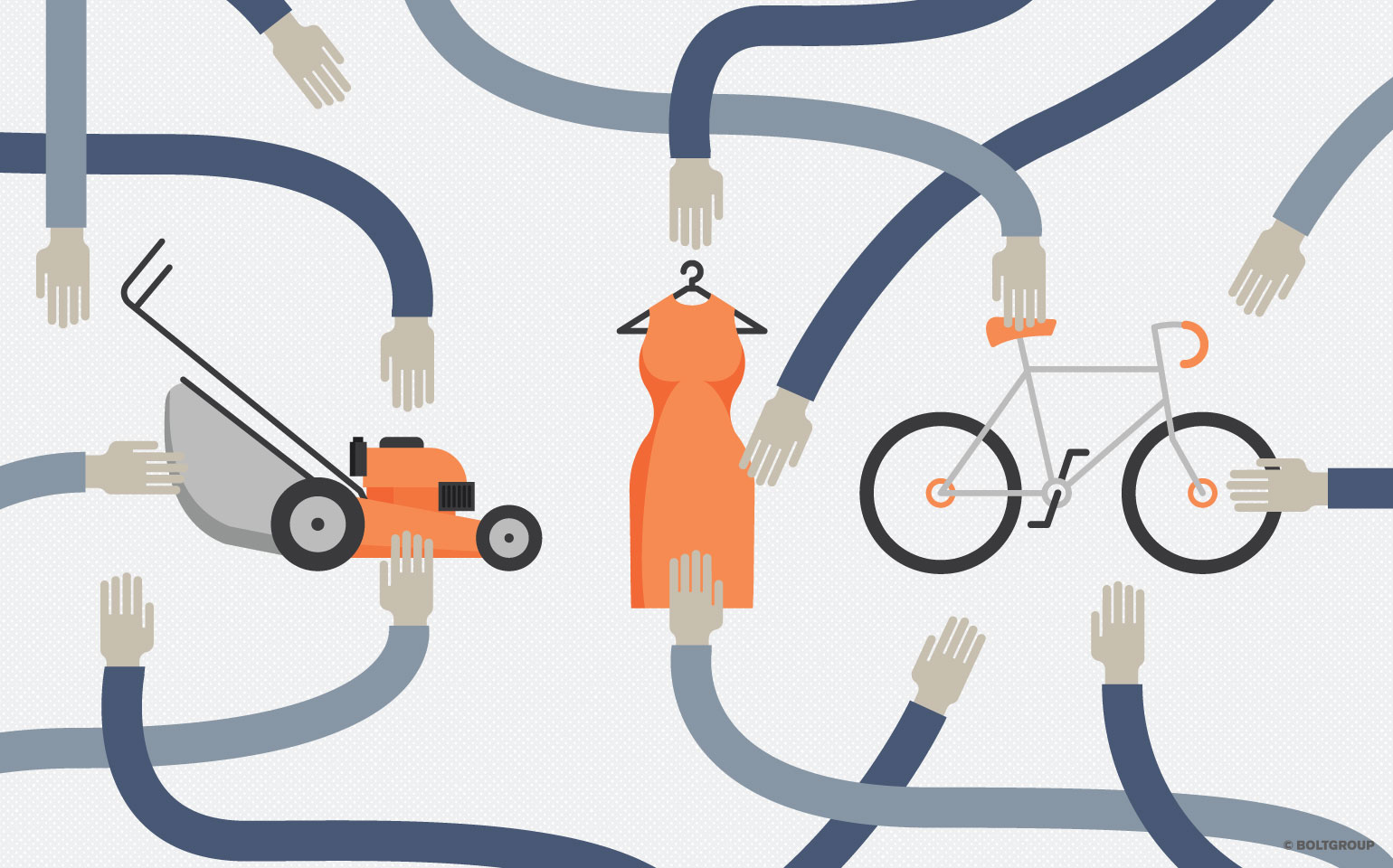
The sharing economy is changing the way we interact with products we use. In fact, it’s even changing the products themselves. Thanks to improved technology and connectivity, consumers have more options than ever to get the products and services they want—including sharing directly with other consumers. When we share on a broad scale, we often can access a wider variety of higher quality products. That’s why the sharing industry is taking off.
First isolated to the hospitality (Airbnb, VRBO) and transportation (Uber, Zipcar) industries, we now see sharing startups in fashion, tools, home goods, lending, workspaces, and more. Product manufacturers and designers need to pay close attention to the sharing economy to understand how it will impact their industry, their business, and their products.
Collaborative Consumption and the Sharing Economy
Collaborative consumption refers to a new twist on traditional market behaviors, like renting, lending, and sharing. Instead of businesses owning the products, and selling or renting them to consumers, businesses become the facilitators for the transaction. They build the platform that makes the transaction possible, easy, and safe for provider and user. Sharing is just one way consumers can collaborate to get more value out of products. On-demand services like Uber, Lime, and Instacart are not sharing services in the original sense, but they use technology and social networks to connect consumers directly to shared products and service providers.