November 4th, 2026
AI and Human Creativity: Lessons from Converge-con
In BOLTGROUP’s efforts to stay informed on the latest technological developments and continued learning, I recently had the pleasure of enjoying a half day of a 2-day conference on AI in Chapel Hill, NC, called Converge-con. There were presentations, workshops, experiments, discussions, and performances involving AI its impact in a multitude of disciplines, from law to education to creativity.
While I was unable to stay for the full two days, the three sessions I attended—Art and Technological Innovation, The Unknowable You, and Creative Friction: The Role of AI in Creative Advertising—gave me plenty to think about. What follows is a recap of each, along with a summary of what I took away.
Art and Technological Innovation
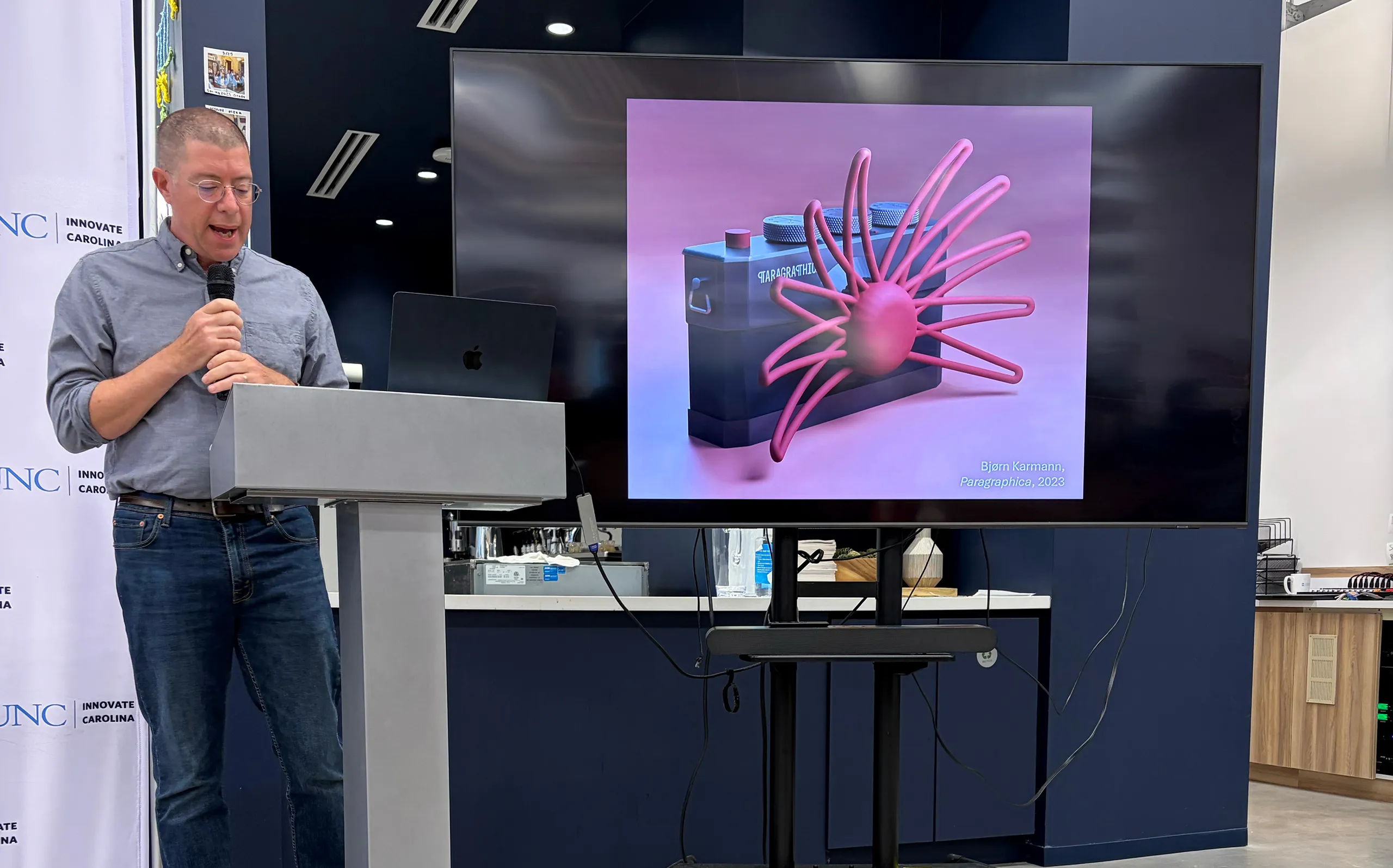
First, Dr. Cary Levine, Professor of Contemporary Art History, discussed AI and art, with a short lesson in art history before moving on to examine Bjørn Karmann’s Paragraphica, a camera that uses location data and artificial intelligence to visualize a “photo” of a specific place and moment.
A lively discussion followed debating who the actual creator of “art” is when AI is involved. While there was no resolution, the discussion echoed a familiar pattern of dismissing new tools as not “real” art. When photography was introduced, early artists and critics dismissed it as a mindless mechanical process that lacked human genius and emotion. When computers began to be used to create graphics, the art question arose again. New tools seem to complicate the definition of art.
The Unknowable You
In the next session, writer Tommy Tomlinson, spoke on “The Unknowable You” about AI, creativity, and self-awareness. He opened with an anecdote about sugar versus artificial sweeteners, noting that no one has come up with an acceptable substitute for real sugar. Based on that logic, he continued, AI doesn’t have much of a chance of replacing a real person.
He also addressed the idea that there may be a point in the future where we will no longer be able to differentiate between a human brain and an artificial one. He provided examples of humans creating masterpieces outside of their own self-awareness like Bruce Springsteen’s “Born to run” and Samuel Taylor Coleridge’s poem “Kubla Khan”. If human creations come from some place inside us, how can that compare to what AI can create?
Creative Friction: The Role of AI in Creative Advertising
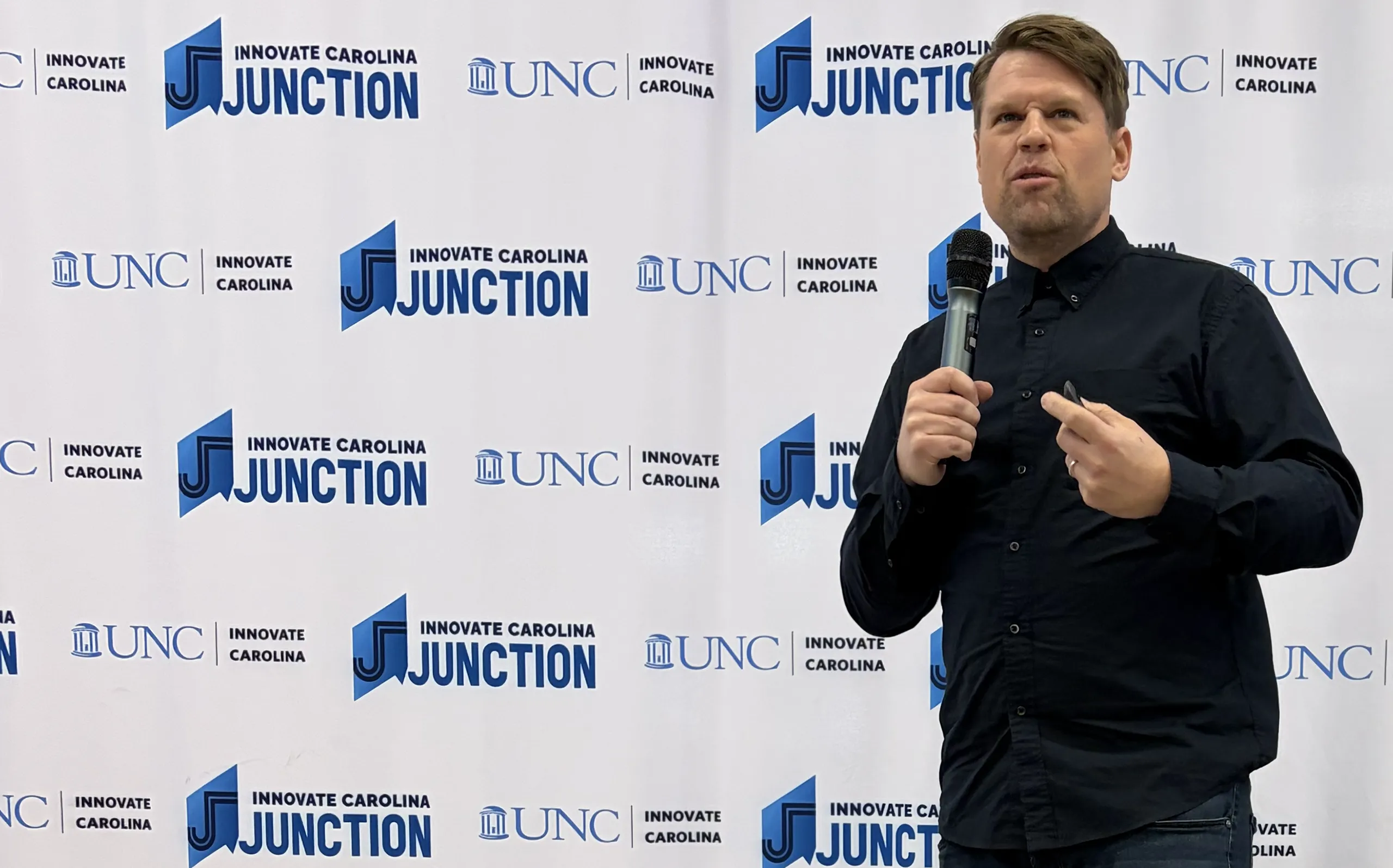
If art and the written word raises questions about authorship and self-awareness, the final workshop turned those questions into practice. Ryan Paulson, former Chief Creative Officer at Dentsu, led a hands-on workshop on the role of AI in advertising beyond efficiency and speed. Using thorough prompts and detailed, example creative briefs we had LLMs map obvious creative routes, reframe communication problems using diverse, outside fields, and diagnose ideas, using long, 600+ word explanations rather than quick prompts.
While AI can be used to make repetitive tasks faster, speediness will not lead to transformative creativity. Being thoughtful and detailed in your prompts, searching for unique ways to look at a problem, takes time and human contemplation to complete.
For us at BOLTGROUP, that distinction matters. The tools are only as good as the thinking behind them, and the sessions reinforced that our value lies in framing the right problems and asking better questions, not just generating faster output.
In summary, like any emerging technology, there is still much unknown. I’m reminded of the classic movie, Desk Set, in which a large computer is installed in the research department of a television network by an efficiency expert. The staff fear the computer will make their jobs obsolete. Instead, the office actually needed to expand, with job roles shifting rather than disappearing.
Perhaps this will be the evolution of AI. Some jobs will be lost, but others will be created. From the workshops and presentations I attended, I think there is still no substitute for all the real things—emotions, social influences, curiosity, pursuit of purpose, empathy, and a host of other traits—that make us human.