September 29th, 2020
Instagram Live Q+A With Little Burros
Our good friends and client, Little Burros, recently took to Instagram Live to give their followers a behind the scenes look at how their product and brand came to be. Our Creative Director, Chris Cureton, and Design Director, Kurt Rampton, joined in to recount the design innovation process that BOLTGROUP used to help Little Burros bring their revolutionary product to market. We discuss a range of topics covering research, strategy, and both brand and product development.
Click here to learn more about our work with Little Burros.
Transcript
This Instagram Live transcript has been edited for length and clarity.
Little Burros
Hey everyone—Little Burros are live! We’re excited to be with our friends at BOLTGROUP, who engineered and designed our product. After Shark Tank, we got flooded with questions about taking an idea from concept to shelf—not just e-commerce—so we pulled a few of the top ones.
When we came to you, we were just like a lot of these folks—an idea and a need for a design partner. We found you through research, saw your work on Kobalt, and that’s what made us reach out. Then we realized you’ve worked with some legendary brands—so give everyone a quick background.
BOLTGROUP Background
Chris
Happy to. We’ve partnered with a wide range of companies, including Lowe’s—on both brands and products—as well as Coca-Cola, Herman Miller, GE, IBM, Rubbermaid, Maytag, and Izod. But we work with organizations of all sizes.
What matters most is the challenge and whether we’re the right fit. We’re a design innovation firm with designers, strategists, researchers, and engineers. Using a people-centered design thinking process, we support product design and engineering, brand strategy and communications, digital experiences, and service design.
Often clients come to us for one need and discover we can help across the full system—especially when we’re involved early at the strategy level.
Little Burros
I’ve seen the range of what you’ve done—even things like that biodegradable USB. It’s wild. You’re impressive, and we’ve loved working with you.
Chris
Thank you for the kind words.
Building a Brand
Little Burros
We explored dozens of donkey and burro directions—27 logo concepts in total—testing ears, type, and color. For someone starting from scratch, what are the key components of building a logo and brand the right way?
Chris
Building a logo is a big process—because it isn’t just a mark, it’s the start of a system.
We explored many directions—different compositions, type styles, and character expressions—before narrowing to what best fit your brand. But that work doesn’t start with sketches; it starts with strategy.
Before we draw anything, we define the brand foundation: purpose, personality, audience insights, competitors, and how you need to show up at shelf. That foundation becomes the filter for every design decision.
Our people-centered process also means getting to know you and your customers—what you’re trying to accomplish and what they need—so the brand is positioned for success.
In your case, the backstory mattered. Your father grew up near the Little Burro Mountains in New Mexico, and that became an authentic anchor for the name and logo. We always look for those real connections.
The burro itself is hardworking and dependable—an ideal symbol for a product built for real work. We wanted him to feel capable and confident: serious, but not stiff. Even details like the ear shape matter—that’s where personality shows up.
Little Burros
We kept seeing the pointy ears on all these different burros, and they didn’t feel as friendly as the soft ears.
Chris
Exactly. Those small details carry meaning.
Great logos also have to work in the real world—not just on a screen. They need to hold up when stamped, molded, or printed. That’s why we start in black and white. If it works in one color, it’ll work anywhere.
From there, the logo becomes the seed of the visual system—icons, packaging, and the broader brand language. And we keep checking everything against the same strategy, so the whole team stays aligned.
Little Burros
Our whole family loves the logo. You captured the Burro Mountains, the crisscrossed tools, the banner—and the ability to deconstruct the logo has been huge. We use that everywhere: packaging, marketing, icons.
Chris
That flexibility is key. Start with strategy, build for real-world constraints, and design something that works at any size, in any application. If you do that, you’re ready to adapt anywhere.
Prototyping and Engineering Process
Little Burros
Kurt’s joining us now. When we came to you, the Little Burro was just a cardboard prototype. We wanted it to fit multiple wheelbarrow sizes—four through seven cubic feet. Can you go through the engineering process and getting that to happen?
Kurt
We knew it had to fit what customers already own. No one’s buying a new wheelbarrow just to use an accessory.
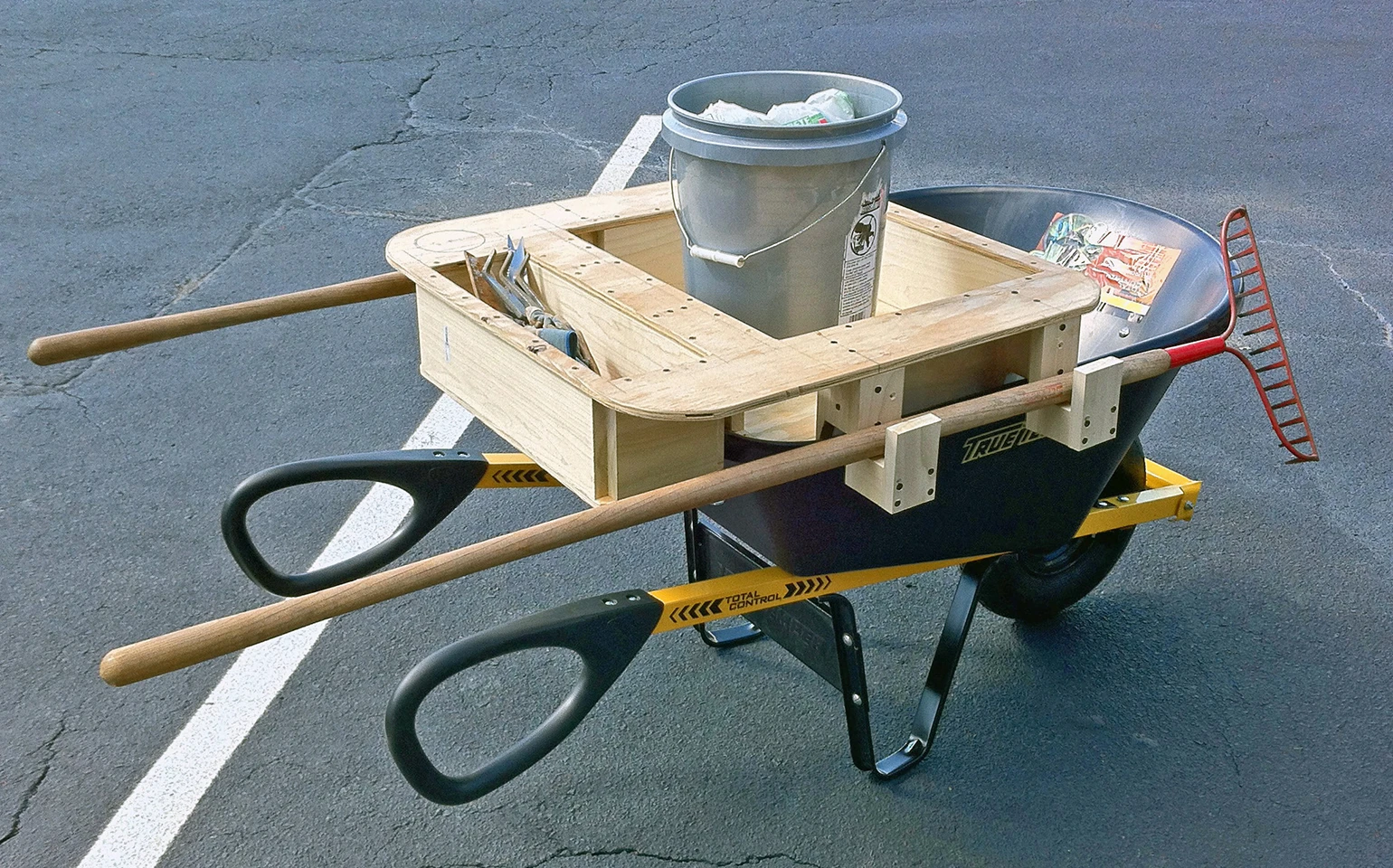
So, we bought the most common wheelbarrows, reverse-engineered them, and rebuilt them in CAD. By overlaying those models, we found shared geometry we could anchor to.
From there, we prototyped multiple attachment concepts—first fast “Frankenstein” builds in wood, then refined 3D prints—testing across wheelbarrows until we hit the common contact points that made it work.
Little Burros
That feature fits four- to seven-cubic-foot wheelbarrows and can lean to 90 degrees without coming off. You entered it in the International Design Awards and won bronze. I’d only ever seen the final presentation, so it’s fun to see the behind-the-scenes.
Kurt
That recognition was exciting. It’s fulfilling when a product not only looks good but works in a genuinely new way.
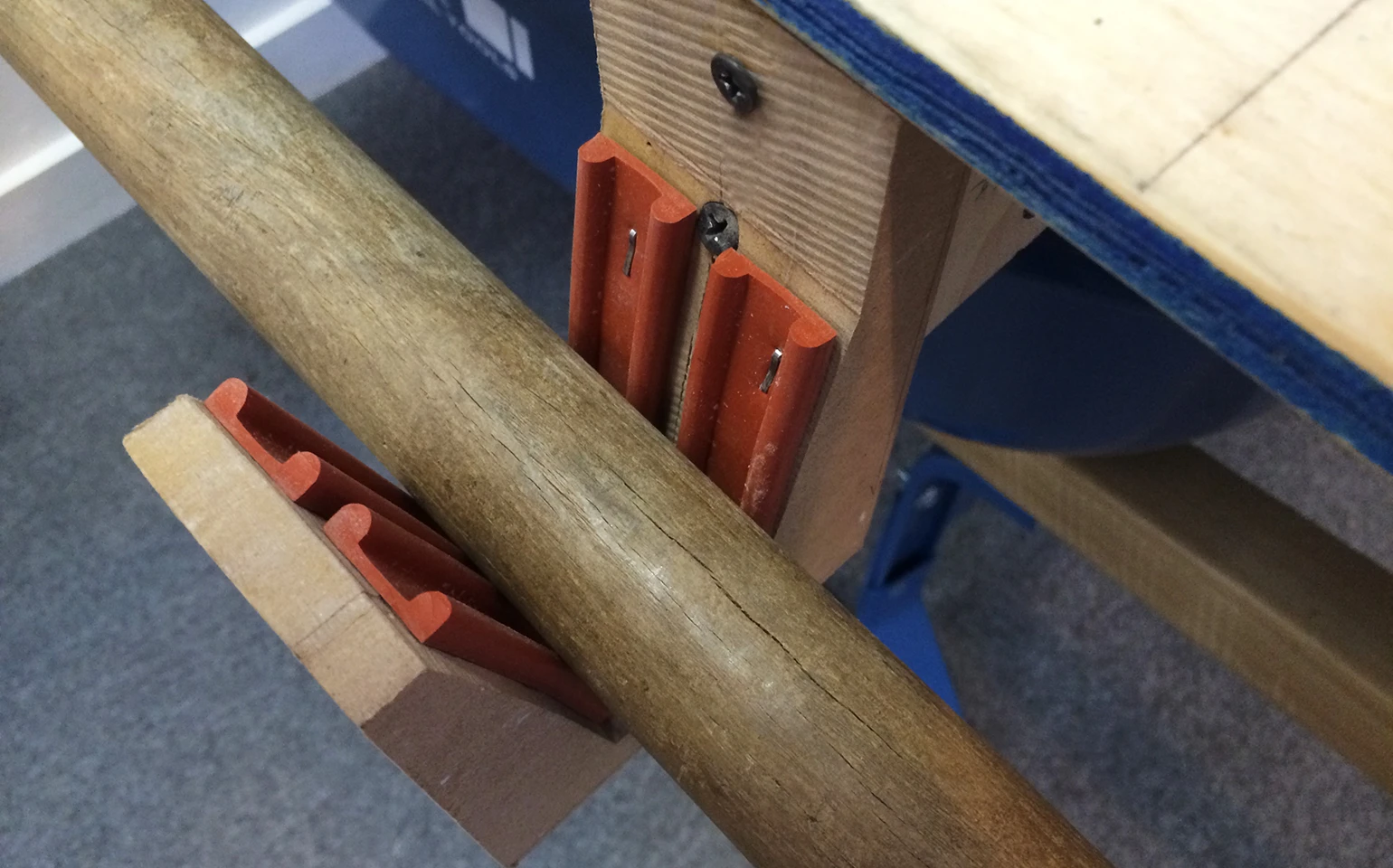
Another big challenge was securing long-handled tools—making sure they stayed put through tipping and movement. We bought a wide range of tools, mapped handle diameters, and tested multiple concepts until we landed on the most intuitive solution.
We wanted no extra parts—nothing to break or confuse users. The one-piece wedge design grips a wide range of handle sizes. Early on, we mocked it up with an off-the-shelf silicone seal in a wooden prototype—and it held.
Little Burros
We patented those grips, and they hold everything from half-inch handles to three-inch tools. We’ve even seen people put fishing poles in there and use it for fishing.
Kurt
Exactly. We also knew from your construction background that job sites might use this too. So, we designed for a wide range and let the market tell us where it fits best.
User Research and the Design Process
Little Burros
We’ve even seen some two by fours go in the side. There is a question here: what kind of research is involved in the design process?
Kurt
We start with user research—conversations and observations to understand needs and frustrations. In this case, we’d talk to gardeners and DIYers and learn what wheelbarrows they actually own.
Those insights drive concepts, and we validate them again with prototypes. For a product like this, research doesn’t have to be expensive—friends, family, and real users gave us fast, honest feedback that helped refine the design.
Little Burros
We saw the same thing in construction—people even used the wheelbarrow as a sawhorse, which you later built into the design.
Kurt
That was a fun hidden feature.
Little Burros
It’s neat to see how woven the branding and the engineering and the designing of the product is. That’s why we needed a team like you who can do everything in-house all at once.
Trade Show Booths
Little Burros
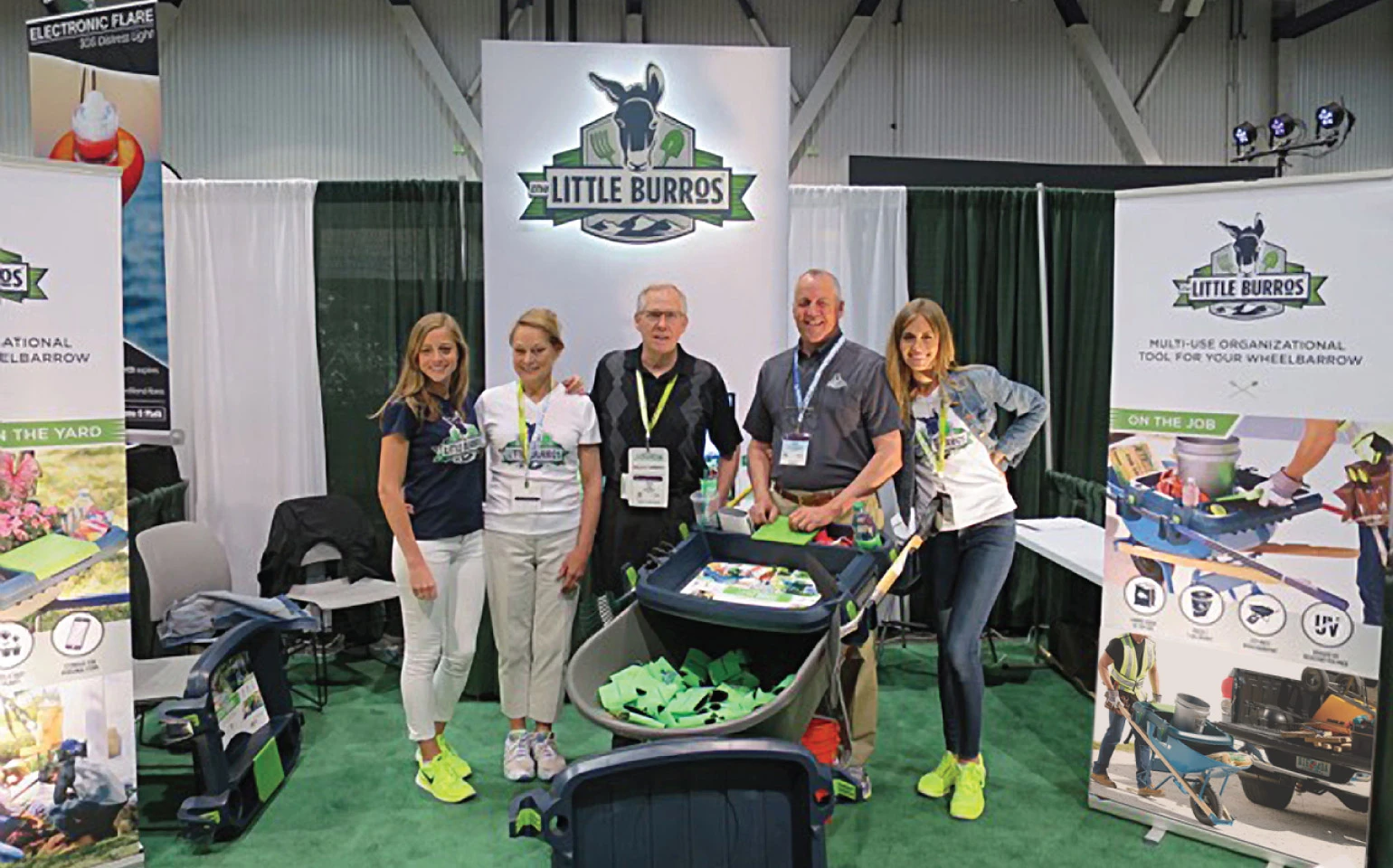
We’ve been getting asked by people about bringing a product from concept to product to shelf. A lot of people think the process is pretty much production to store shelves. In reality, the process usually involves a lot of trade shows where buyers walk the floor to see new products. You built our trade show booth that we still use today, and it was a game changer for us to have a standout booth. Can you speak on why trade show booths are so important and a little about what you suggest for new products wanting to get noticed at trade shows?
Chris
Trade shows are a rare chance to tell your story in 3D. You’re not fighting for inches on a shelf—you own a space. Your goal is to attract attention, communicate quickly, and start conversations with buyers.
For your booth, clarity was the differentiator: a bold logo landmark, clean messaging, and flexible graphics you could update. Then you amplified it with your team presence, giveaways, and social—so the booth didn’t stop at the aisle.
My advice: know your key talking points, design for quick comprehension, demo the product, and show up like the owners—because buyers remember people as much as products.
Little Burros
We met pretty much every single one of our buyers at a trade show. I will have to say that interactive aspect of, “Hey, would you like a koozie?”, and then being able to talk to them and get to know them was instrumental into communicating with buyers. The koozies you were able to make for us with our deconstructed logo were phenomenal. Also, most booths go with the typical heights and the typical railing, but our booth was two feet taller than all the booths around us. In addition, you put the LED logo on top so you could see our booth from the entrance.
Chris
Being there and having those messaging points, knowing what you’re going to say, knowing what those key points are that you want to communicate, down to the tagline that you launched with, the “All work. No hay.” Again, personality, but it’s also that conversation starter.
Little Burros
Someone is asking, “What are ways to interact with potential buyers if trade shows are on hold due to COVID? What are their alternatives right now to market yourself?”
This is a phenomenal question because this is such an issue for our industry at large—the hardware industry, and pretty much any industry that thrives on live events or trade shows. Go straight to buyer websites and look for virtual line reviews or Zoom buyer meetings. If you’re in home improvement, check Lowe’s and Home Depot vendor portals and event calendars. And keep your social active—buyers are watching. Short videos and clear product demos travel fast right now.
Chris
That’s where those assets like the videos and stuff that you can quickly send and people can quickly get what you’re trying to communicate come in as well.
Little Burros
Buyers are paying attention to social media, so we talk to buyers through social media platforms sometimes too. You never know who’s paying attention and who stumbles across something while looking through a garden hashtag. I would continue to keep up with your brand and keep putting your product out there.
Chris
A lot of people have a lot more time to scroll through things right now so if you can show up that’s great.
Product Line Extension
Little Burros
After getting feedback from our initial Little Burros, we came to you with our second product. This was a pivotal moment for us to make sure that we had a product that was new and interesting yet still combined the feedback that we got from the first product and made it consistent with our brand. Something you do a lot is product brand extension and we knew we could trust you with it, but would you go into what that process is like and a little bit more about that?
Chris
That’s where the early strategy work pays off. When you’re asked to pivot, you don’t scrap everything—you use the same vision to guide smarter decisions.
Little Burros
You’d find engineering ways to make it still lightweight yet handle a 30-pound digging bar on either side. The product itself, the Burro Buddy, weighs three pounds yet it can still hold two 30-pound digging bars on each side. You were able to take essential elements and features that we heard from customers were the most effective when saving time and still make them so user-friendly and easy for everyone to use.
Chris
Which makes you even more innovative, and challenges are what spark innovation most of the time.
Little Burros
When we came to you and said we want to create the Burro Buddy, there was a battle with the color of the Burro Buddy. You all wanted to go with the dark Burro blue, and we wanted to go with the Burro gray.
Kurt
We try to have a collaborative approach. One of the most important stakeholders in this process is you and your team. You are going to own this product. You’re the ones that have the experience at the National Hardware Show talking to the retailers, hearing what they have to say, seeing what they’re attracted to, and what gets attention. And you’ve also been selling the original Little Burro now in the blue for a while, so you have valuable experience that we don’t discount or disregard.
I think your instincts there were spot on because you recognized that you wanted to continue to stay within this great brand that we had built but you wanted the product to have some differentiators from the original Little Burro. It’s a tricky balance to strike but it was done nicely, and by choosing a lighter color instead of the dark blue gave the product a fresh look.
The original Little Burro did come out in the Burro blue, and I have an initial sketch of the Burro Buddy that we did in blue. We liked the blue but the actual color that it came out in is nice because it still works with our color palette. We were able to use the exact same part for the lid and the parts for the tool grips, and the color scheme fits in the family nicely. But the lighter color product has a nice bright look, and it stands out at retail. We have to collaborate with you to get to the right solution.
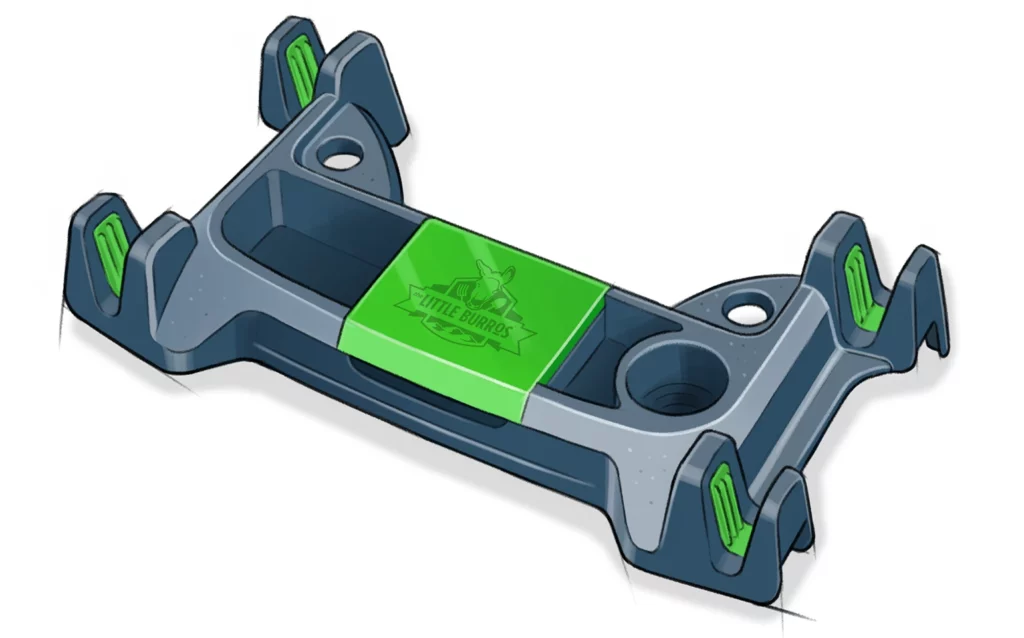
Burro Buddy Sketch in Burro Blue
Little Burros
The exact color that we pulled that we liked for the Burro Buddy was actually the logo’s colors. We still use your branding and deconstructed logo to be able to pull some of these colors that we’ve been using and be able to apply that to the new product.
We have been to trade show after trade show after trade show, and we love to see it sitting on the product, and the wheelbarrow itself pops with a Burro Buddy on top of it. We’ve seen the traditional blues, the blacks, the reds, the oranges, and those deeper hued colors as the primary color for wheelbarrows in the market, and we knew that with this lighter gray that could create a nice contrast and differentiate. Because we’re not the wheelbarrow, we’re the accessories.
Kurt
Design is a struggle sometimes, but you’re working together to make the product better. You challenged us in the best way, and as designers, that’s what we take to heart, and we want to get there together.
Start with Strategy
Little Burros
Getting back to some of these questions. We had the best time partnering with you to not only build the products but the brand. We have so many people asking us how to get started. Do you have any advice that you want inventors to take when they are starting to build their ideas? And any cautionary tales in taking your idea and your branding and building it into a product?
Kurt
Start with a strong strategy —and a vision beyond the first product. Know where you’re headed so retailers and customers can believe in the brand long-term.
And make the thing. Test it. Break it. Learn from it. That cardboard prototype you brought us already contained the core idea. When you’ve taken it as far as you can on your own, find a partner who shares your vision and can help you take it further
Little Burros
We’ve worked together for seven years, and we’re incredibly grateful. We can’t imagine doing this with anyone else.
Kurt
We feel the same. Seeing your success—and knowing our work helped bring it to life—is why we do what we do.
Our business is a little bit unique because we do product development and engineering, and we also do brand identity development, packaging, and strategy that’s associated with the brand component of the product. You had great ideas for both the brand and the product, but you needed help to bring them to fruition together. As designers, we love that we get to be at the genesis of the brand and the genesis of the product.
Little Burros
We can’t speak highly enough of BOLTGROUP. We encourage you to go follow them on Instagram because we enjoy seeing their daily uploads of innovative ideas and new brands that they’re working with.
Thank you, Chris and Kurt. This feels like family.