Blog
August 11th, 2026
Why Rebrands Fail—And What Brand Continuity Actually Requires
Chapter 10
There is a pattern that repeats with enough regularity to constitute a kind of organizational law. A company invests in a rebrand. The launch generates real energy—internal excitement, press coverage, a trade show booth that finally looks the part. Eighteen months later, quietly and without any single dramatic failure, the brand starts to drift. The new visual system is applied inconsistently. The messaging platform gets interpreted differently by different teams. Two years after the rebrand, the brand looks like it needs another one.
This is not a design problem. It is a continuity problem. The companies that avoid this pattern are not the ones that rebrand better. They are the ones that rebrand less because they built a system for continuous renewal rather than relying on periodic reinvention.
5 Reasons Rebrands Fail
1. The rebrand addressed the symptoms, not the source—a visual refresh applied to a Strategic or Behavioral disconnect produces a brand that looks coherent and functions incoherently. The strategy has to precede the design.
2. The strategy lived in the launch, not the organization—when the agency relationship ends and the internal brand champion moves on, the organization is left interpreting a strategy that was never embedded deeply enough to govern without guidance.
3. Governance was treated as optional—without the ongoing discipline of reviewing new work against brand standards and holding the system accountable across every function, every new hire and vendor becomes a small act of brand dilution.
4. The brand was built for the current state, not for growth—a Visual Brand Language built for two SKUs will strain when it reaches twenty. Rebrands that do not build in scalability create a constraint the business eventually outgrows.
5. Continuity was confused with stagnation—the fear of looking dated drives more unnecessary rebrands than competitive pressure does. Refreshing the execution while honoring the system is continuity. Replacing the system because the execution felt stale is a rebrand that was never necessary.
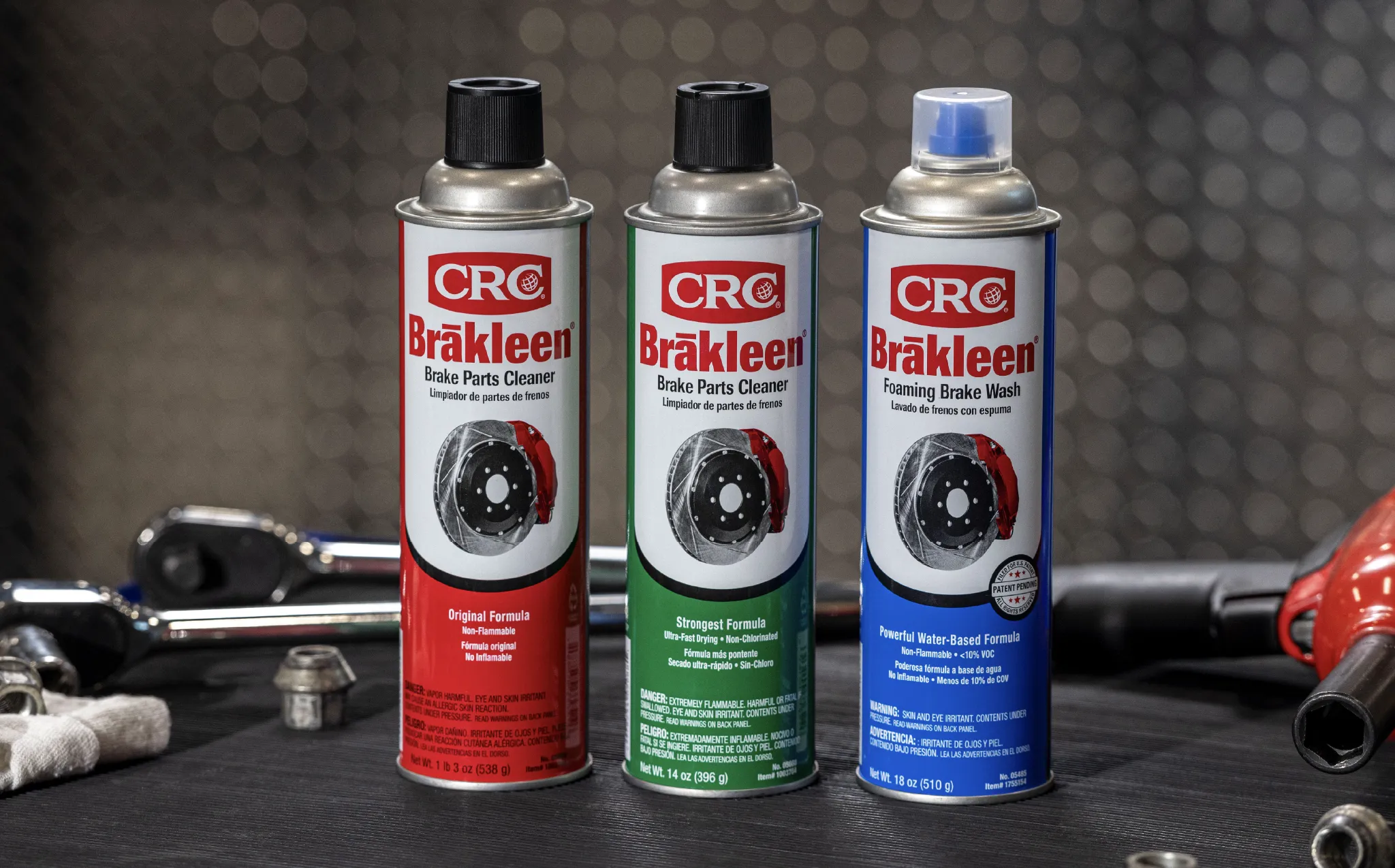
CRC Brākleen: Fifty Years of Category Leadership
CRC Brākleen has been the original aerosol brake parts cleaner since 1971. For over fifty years it has maintained category leadership through regulatory shifts, environmental mandates, new competitors, and channel evolution that would have undone brands with weaker foundations.
It did not survive those decades by staying the same. It survived them by knowing what to change and what to protect. When CRC Industries brought BOLTGROUP in to reposition the Brākleen line, the work began with research—updated competitive landscape, refreshed consumer understanding of professional technicians and serious DIYers—and produced a product brand strategy and messaging platform that honored Brākleen’s legacy while giving it language for a market that had evolved.
“I know when we’re working with BOLTGROUP, we’re getting their very best; it’s how they approach the business of design.”
— Julie Williams, Vice President, Marketing, CRC Industries
The result was a relaunch, not a rebrand. CRC Brākleen did not change what it was. It renewed how it expressed itself. The brand’s core equity—trusted performance, professional-grade reliability, fifty years of category authority—was the foundation the relaunch stood on.
HunterLab has had a strategic design partner for twenty-five years. Kobalt became Lowe’s template for private brand development because it was stewarded carefully over time. CRC Brākleen has held category leadership for over fifty years because the brand is renewed continuously, not replaced periodically. These are not coincidences. They are the outcomes of organizations that understand that a brand is not a project. It is a system that requires ongoing care, and that the care compounds, year over year, into something their competitors cannot buy, borrow, or replicate.
| The difference between a rebrand and a renewal is the difference between starting over and building forward. A renewal asks: what are we, at our best, and how do we express that more clearly than we did before? |
The work in front of you is not a rebrand. It is a renewal. And it starts with an honest answer to one question: what are you, at your best, and are you expressing that, consistently and with care, everywhere your brand shows up?
ABOUT THIS SERIES
Differentiation by Design
Ten chapters. Forty years of proof. One argument: the companies that treat design as a strategic capability build brands that compound over time in ways their competitors cannot explain and cannot replicate
The next step in this argument is a book. Culture of Design goes deeper into what it means to build an organization where design is not what you hire, but how you think. If this series resonated, the book is where that conversation continues.
Stay tuned.